DreamLabs
DreamLabs
DreamLabs
[Timeline guide]
Get version one into users' hands this quarter, on a launch date you can plan around. For founders and teams with a date to hit, DreamLabs designs and builds the app: a two-week strategy sprint scopes your first release, and most builds take about 6 weeks after it. Store review usually adds days, not weeks. Here's every phase, with timelines from our published case studies.
Start with a strategy sprint[At a glance]
| Phase | How long | What sets the pace |
|---|---|---|
| Strategy sprint (DreamLabs) | Two weeks, for a flat $4,000, refunded in full if we don't move forward together | How quickly you decide what version one must prove. It ends with a features table, wireframes, first-release scope and a build price you approve |
| Design and build | About 6 weeks for most DreamLabs builds. Published examples: three weeks of development for OOM, eight weeks from idea to launch for GlowCode | Features and user types, integrations, and how fast feedback comes back |
| Developer accounts | Start in week one; both stores verify who you are | Apple also verifies an organization's legal entity status and address |
| App Store review | At least 50% of submissions reviewed in under 24 hours, 90% in under 48 (Apple) | A complete submission, including a working demo account for anything behind a sign-in |
| Google Play review | Up to seven days, or longer in exceptional cases, for some accounts. New personal accounts first run a 14-day closed test, then a production-access review that usually takes seven days or less | Account type and age, and your testing history |
| Launch and iterate | Ongoing: Grove shipped 12 updates between its February 3, 2026 App Store launch and August 13 | What users tell you, turned into a monthly roadmap |
| For comparison: a typical app project | About 11 months (Clutch, from verified client reviews) | Scope: the number of features and user types |
[Real timelines]
This guide is for founders and teams who need a launch date they can plan around: a board meeting, a pilot customer, a funding milestone. For a focused first release, plan in weeks, not months. At DreamLabs, a two-week strategy sprint scopes version one, most builds take about 6 weeks after it, and Apple reviews most submissions within a day or two. The longer numbers you'll see elsewhere are real too: Clutch's 2026 data puts the typical mobile app project at about 11 months, and hiring your own team first adds recruiting time, a median 75 days to first fill a technical role according to Ashby's 2026 hiring data. The difference is mostly scope: what version one has to prove, and what it can leave for version two. Every outside figure below links to its source and was checked on October 8, 2026.
We learned this as clients first. In 2020, when Tomás and John needed a web app, a team of traditional developers told them the prototype would be ready within one month. Several months later it still wasn't complete, and it was well over budget. They built it themselves in two weeks instead, and DreamLabs started there (our story).
These are the timelines as published on each case study. Development figures start once user stories and wireframes were done; end-to-end figures include planning.
Most schedule slips start as scope questions nobody answered before the build. The sprint answers them first: what version one must prove, a full features table, UX wireframes for your core flows and the scope of your first release. The build price is set and approved at the end of it, so the build starts from a plan and a number rather than an estimate. If you'd like a head start, our free product roadmap template and guide walks through the same thinking.
We build with AI-accelerated development: mostly in Flutter, in Swift when native iOS is the right call, and in React, React Native and Next.js on Firebase or Supabase. One Flutter codebase ships to both app stores, as GlowCode's did, so iPhone and Android don't need two separate schedules. We test on real devices. Whether this phase takes four weeks or eight comes down to the number of features and user types, integrations such as payments or bank linking, and how quickly decisions come back.
Apple says App Review typically reviews at least 50% of submissions in less than 24 hours and 90% in less than 48 hours, and that incomplete submissions may be delayed; if features require a sign-in, Apple asks for a working demo account. On Google Play, some developer accounts get extended reviews of up to seven days, or longer in exceptional cases.
One rule adds weeks if you don't plan for it: personal Google Play developer accounts created after November 13, 2023 must run a closed test for at least 14 days before they can apply for production access, and Google says that review usually takes seven days or less. Open your developer accounts in your company's name in the first week. Apple verifies an organization's identity, legal entity status and address during enrollment, and Google Play asks every new developer to verify their identity.
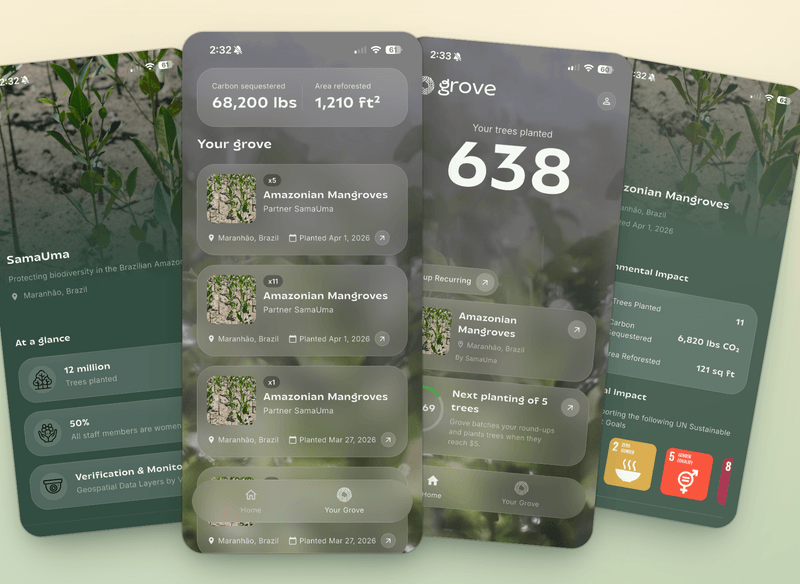
A first release starts the learning, so plan the second one before the first ships. Grove shipped 12 updates between its App Store launch on February 3, 2026 and August 13, including a full design overhaul and Google and Apple sign-in. Nurture reached 19 releases across its mobile app and admin web app by August 2024, and the app still receives updates. After GlowCode launched, we led four user testing sessions that produced 24 points of feedback for product improvement; our user testing guide shows how to run them. UNALTERED grew over three releases in 13 months.
[Keep the date]
[01]
One outcome: paying users, a pilot customer, a metric for your next round. Everything that doesn't serve it goes on the version-two list. This is the biggest single lever on your timeline.
[02]
Enroll in the Apple Developer Program and Google Play Console in your company's name at the start. Both verify who you are, and new personal Google Play accounts must run a 14-day closed test before they can apply for production access.
[03]
Name one person who can approve screens, copy and trade-offs. A six-week build has no room for week-long feedback loops.
[04]
Give App Review everything it needs, including review notes and a working demo account for any feature behind a sign-in. Apple says incomplete submissions may be delayed or may not pass.
[05]
Decide how you'll learn from your first users, through analytics, user testing or both, so the weeks after launch produce decisions as well as downloads.
[How we work]
DreamLabs is an AI-powered app development agency in California that works as a fractional product team, from strategy to launch. Tomás Quiñonez-Riegos leads product and John Krueger leads development (meet the founders).
Erick Szentmiklosy, co-founder of Haikuists: “They delivered on time every single time.”
[Cost and timeline guides]
Still deciding who should build it? Compare agency, freelancer, in-house and fractional paths →
[FAQs]
A focused first release can take weeks; a large product can take a year. Clutch's 2026 data puts the typical mobile app project at about 11 months. At DreamLabs, a two-week strategy sprint scopes version one and most builds take about 6 weeks after it. Grove, our own product, went from idea to both app stores in six weeks.
At DreamLabs, about eight weeks for most projects: a two-week strategy sprint, then about 6 weeks of design and build. Published examples include three weeks of development for OOM and eight weeks from idea to launch for GlowCode. Store review usually adds days, and a new personal Google Play account adds a 14-day closed test.
Apple says App Review typically reviews at least 50% of submissions in less than 24 hours and 90% in less than 48 hours. Incomplete submissions may be delayed or may not pass, so include review notes and a working demo account for anything behind a sign-in. You can request an expedited review for a critical bug fix or an app tied to an upcoming event.
Google says some developer accounts get extended reviews of up to seven days, or longer in exceptional cases. Personal developer accounts created after November 13, 2023 must first run a closed test for at least 14 days, then apply for production access, a review Google says usually takes seven days or less.
Often because of scope. Clutch's 2026 data puts the typical mobile app project at about 11 months, and agencies had quoted Urban Outdoors six months for its MVP before we delivered a no-code version in four weeks. A long timeline often means a long feature list. Cutting version one to what it must prove is the biggest schedule change available to you.
It does for us. We build with AI-accelerated development, and Grove, our own product, was built with Claude Code as part of that workflow and went from idea to both app stores in six weeks. AI speeds up writing and testing code. It doesn't speed up deciding what to build, store review or learning from users, so planning still sets the schedule.
Scope that grows mid-build and decisions that wait. Store accounts left to launch week come next, because both stores verify your identity and new personal Google Play accounts need a 14-day closed test. A written first-release scope and one decision-maker on your side protect a launch date better than anything else.
Every project starts with a two-week strategy sprint for a flat $4,000, refunded in full if we don't move forward together. The build price is set and approved at the end of the sprint, and that's what you pay. Most builds take about 6 weeks after the sprint.
[Interested?]