DreamLabs
DreamLabs
DreamLabs
[No-code migration]
For founders whose no-code app has found real users and now needs room to grow. DreamLabs moves FlutterFlow, Bubble, Webflow, Softr and Airtable products into code and infrastructure you own, starting with a $4,000 two-week strategy sprint that maps your app and scopes the rebuild. Most builds take about 6 weeks after the sprint.
Start with a strategy sprint[Before you start]
| Platform | Code you can take | Data you can take | Where we'd take it |
|---|---|---|---|
| FlutterFlow | The full Flutter project: Code Download on paid plans from Basic up, Push to GitHub from Growth up | Already yours: FlutterFlow connects to a Firebase or Supabase project in your own account | Production Flutter on the same backend |
| Bubble | None: Bubble's manual says its apps can only run on the Bubble platform, with no code export | CSV export on paid plans and the Data API; passwords stay behind as one-way hashes | React and Next.js on Firebase or Supabase, or a TypeScript API over PostgreSQL, depending on the app; Flutter when you also need mobile apps |
| Webflow | HTML, CSS, JavaScript and assets on paid Workspace plans, without CMS content, forms or site search | Each CMS Collection and your 301 redirects, as CSV files | A fast static site generated from your CMS data (we use Astro) |
| Airtable and Softr | Rebuilt: the screens become React components | CSV from any Airtable grid view, plus the API at 5 requests per second per base; attachment links expire after a few hours | React over Postgres, with Airtable kept as a read-only archive |
[What comes next]
Your no-code app did the hardest job in software: it proved people want the product. The next stage asks for things a visual builder was not designed to hand you, like code your engineers can branch and test, costs that track infrastructure you control, and features nobody has made a block for yet. A migration moves the product you proved onto a foundation you own, and your current app keeps running until the new one has matched it.
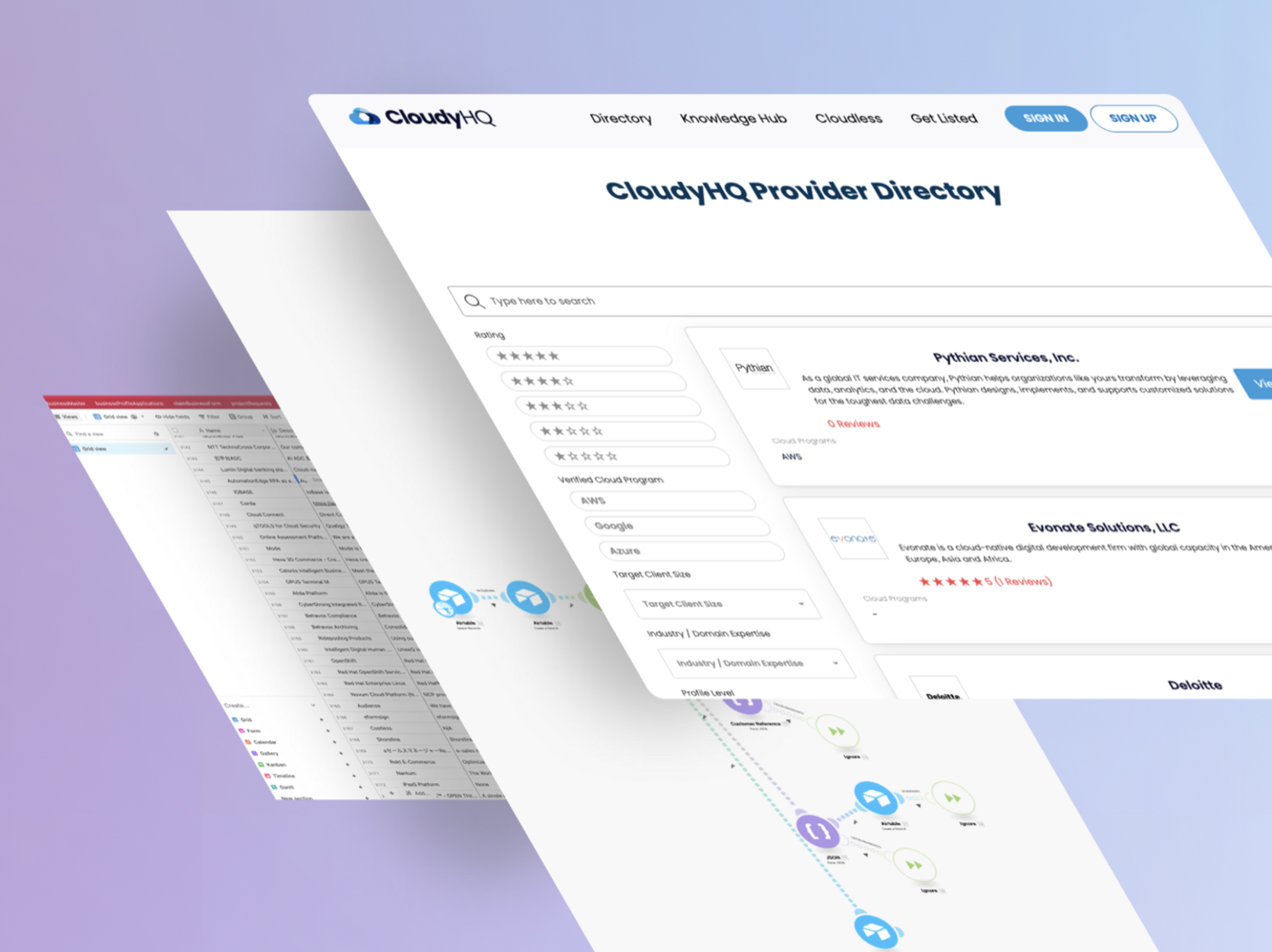
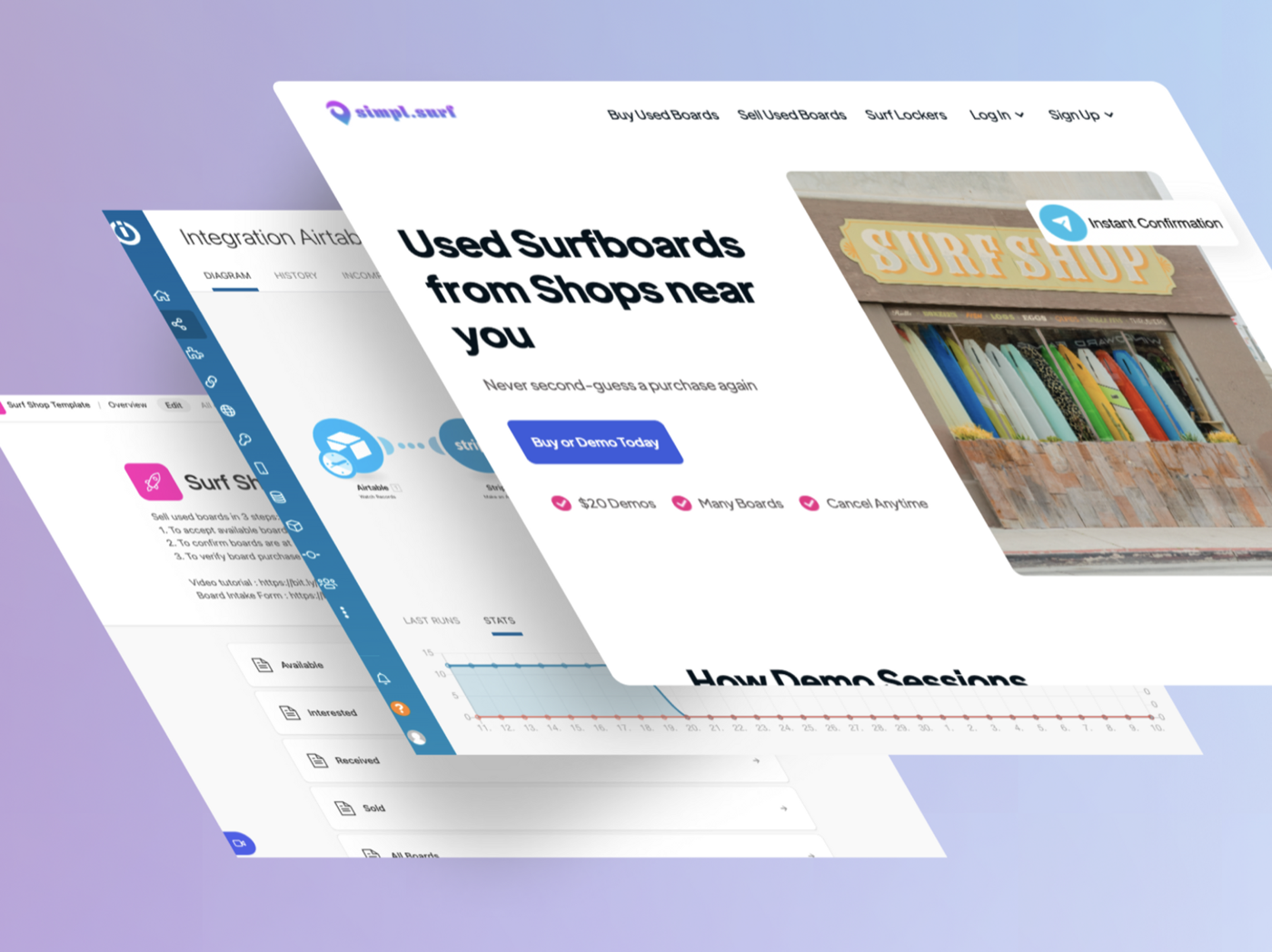
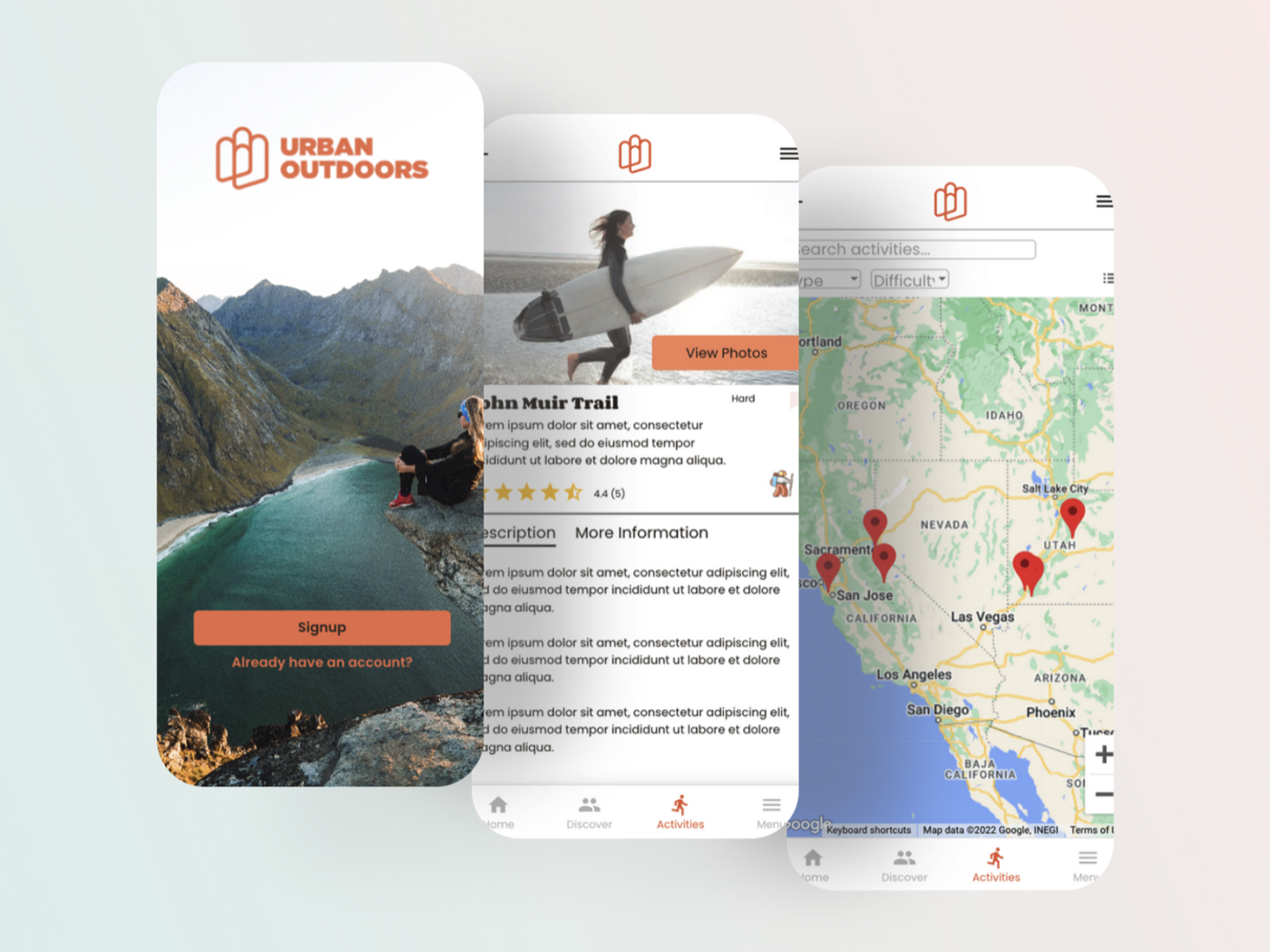
We know these tools from the inside. Our founders launched a three-sided marketplace of their own on no-code tools in two weeks, and our case studies include no-code builds: CloudyHQ on Softr, Airtable and Make, SimplSurf on Webflow and Airtable, and Urban Outdoors, a native Adalo MVP built in six days and in its first users' hands in four weeks, against agency quotes of six months.
The ceilings are specific, and the platforms document them. Bubble meters the server work your app does in workload units, and past your plan's allowance you buy a workload tier or pay overages of $0.30 per 1,000. FlutterFlow gives you real Flutter code, but pushes it to GitHub one way, to a branch it overwrites on every push. Webflow's code export leaves out CMS content, forms and site search, and Webflow retired its built-in User Accounts on January 29, 2026. Airtable caps each base at 50,000 records on its Team plan and 125,000 on Business, and its API at five requests per second per base.
If the platform still does what your roadmap needs, stay. A product with steady usage, no feature blocked and a bill you're comfortable with is not a migration candidate yet, and an internal tool your team edits every day may be better off in Airtable than in code. Migrate when a specific goal needs it: a feature the platform can't build, a customer's or investor's security review, an engineering hire who needs a repository, or costs growing faster than revenue. You can also move one piece at a time.
We have shipped this stack. CloudyHQ's directory, with separate provider and company profiles, paid listing tiers and a 5,000+ record data scrape cleaned into a searchable back end, went from roadmap to launch in six weeks on Softr, Airtable and Make. For an early product it is a good architecture, because data, interface and automations live in tools the whole team can edit. The ceilings arrive with traction: Airtable's Team plan holds 50,000 records per base and 25,000 automation runs a month, the API answers five requests per second per base, and per-seat pricing grows with the team.
More survives the move than you might expect. Airtable's attachment download links expire after a few hours, so we copy every file into storage you own first. Linked records become foreign keys, rollups become queries, and migration scripts check record counts and relationships on both sides. Formulas and filters become backend logic, and Make scenarios and Airtable automations become backend jobs with the same triggers and outcomes. Members move into an auth system you own and set a new password once at first sign-in. Airtable stays the source of truth until you sign off, and you keep a read-only copy for as long as you like.
[How it works]
[01]
Two weeks, flat $4,000, refunded in full if we don't move forward together. A no-code app shows its own logic, so your running product is the spec: we map every screen, workflow, data type, role, integration and automation into a features table. You leave with wireframes for anything that should change, a migration map of what carries over and what gets rebuilt, and the first-release scope we quote the build from.
[02]
Senior engineers rebuild the product on the stack chosen in the sprint. AI speeds up scaffolding, boilerplate and tests; engineers own the architecture and review every line. You compare real screens against your live app in short cycles, so there is no big reveal at the end.
[03]
Your current app stays live and untouched while the new one runs beside it. We rehearse the data migration, verify parity feature by feature, and put real users on staging before anything switches. Cutover is a final data sync plus a DNS change or a store release, scheduled for your quietest window.
[04]
We launch, watch the app under real traffic, then hand over the repository, the cloud accounts and documentation a new engineer can onboard from. Your platform plan can then be cancelled. Keep shipping with us monthly, or hand the product to your own team.
[Where you land]
Where you land depends on what you run. FlutterFlow apps stay in Flutter, on the Firebase or Supabase backend they already use; the FlutterFlow guide covers how, FlutterFlow vs Flutter covers when, and our guide to FlutterFlow exported code shows what to keep from an export. Web apps on Softr or Airtable move to React and Next.js over Postgres, and Bubble web apps to React and Next.js on Firebase or Supabase or on a TypeScript API over PostgreSQL, depending on the app; any of them can move to Flutter on Firebase when the product also needs iOS and Android apps. Our stack guide compares the options, and the Bubble export guide lists what you can take out of Bubble first. Webflow sites become fast static sites generated from your CMS data, the way we rebuilt our own site in August 2026; see the Webflow guide. To get an Adalo or Glide app into the App Store and Google Play, our App Store guide covers what that takes.
Every version ends the same way: costs that track infrastructure you can measure, any feature an engineer can build, and code in your repository that you can host, audit or hand to any future team.
[Platform guides]
[Exports and stacks]
Built it with Lovable, Bolt, v0, or Replit instead? See AI prototype to production →
[FAQs]
Every migration starts with a two-week strategy sprint for a flat $4,000, refunded in full if we don't move forward together. The sprint maps your current app into a features table and scopes the first release, and we quote the build from that scope. With our AI-accelerated process, a build typically costs a fraction of what a traditional agency charges for the same work.
The sprint takes two weeks, and most builds take about 6 weeks after it, versus the roughly 6 months a traditional rebuild takes. A migration starts ahead of a new build because your running app already answers the product questions: what screens exist, how workflows behave, what the data looks like. Products with heavy custom logic take longer, and the sprint tells you how much.
No. Your current app keeps running on its platform, untouched, while we build and test the replacement beside it. The data migration is rehearsed before the real thing, and cutover is a final data sync plus a DNS change or a store release, placed in your quietest window.
Yes. Data comes out through each platform's own export (the table at the top of this page shows what each one offers), and FlutterFlow apps already keep theirs in your own Firebase or Supabase project. Accounts and roles carry over; where passwords can't leave a platform, as with Bubble, users set a new one once. For web products we keep your URLs or 301 each one to its replacement.
No, and often you shouldn't. You can move the piece hitting the ceiling first: the customer-facing app moves to code while the internal admin tool stays on Airtable, or the app moves while the marketing site stays put. The sprint shows where the pressure actually is, and we sequence the work so each phase ships value on its own.
When it still does what your roadmap needs. If no feature is blocked, the bill is comfortable, and nobody is asking for a security review or a repository, a migration buys you little yet. An internal tool your team edits every day can stay on Airtable while the customer-facing product moves. If staying is the better call, we'll tell you on the first call.
[Interested?]