DreamLabs
DreamLabs
DreamLabs
[Bubble to code]
For founders whose Bubble app has real users and a roadmap that needs code they own. Depending on the app, DreamLabs rebuilds it in React and Next.js on Firebase or Supabase, or on a TypeScript API over PostgreSQL, in your own accounts, carrying over your data, users and design. It starts with a $4,000 two-week strategy sprint that maps every workflow and scopes the rebuild, and most builds take about 6 weeks after the sprint.
Start with a strategy sprint[What comes next]
Choosing Bubble was probably the right call. Visual workflows and a built-in database let you put a real product in front of real users without an engineering team, and every Bubble plan now covers native mobile apps as well as web apps. Outgrowing it is what success on Bubble looks like.
The next stage asks for things Bubble's model doesn't offer. Its own manual says Bubble apps "can only be run on the Bubble platform," with no way to export them as code, so the workflows you've built can't leave. Every plan meters workload units, Bubble's measure of the server work your app does: Starter includes 175,000 a month and Growth 250,000, and past that you buy a workload tier or pay overages of $0.30 per 1,000. If overages are switched off when you reach the limit, Bubble takes the app offline until you turn them on, buy a tier or the next billing period starts. A growth spike or one inefficient search shows up on the bill, and tuning it happens inside Bubble's runtime, not in a database you control.
Each new feature deepens the commitment: more logic you can't review with standard tools, can't hand to a mainstream engineering hire and can't take with you. When owning the product starts to matter more than build speed, it's time to move.
If your workload sits comfortably inside your plan, your team ships changes quickly in the editor and nobody is asking for your source code, stay. Bubble is a fast way to run a product at that stage. Move when a specific goal needs code you own: an investor's or customer's security review, an engineering hire, or a feature or cost curve the platform can't meet. Before you plan, our Bubble export guide shows exactly what you can take out, and the limits on each export.
Bubble details on this page were checked against Bubble's manual and pricing page on October 7, 2026.
[How it works]
[01]
Two weeks, flat $4,000, refunded in full if we don't move forward together. We map your Bubble app into a features table: every page, data type, workflow, privacy rule, plugin and API Connector call. Because the app is live, it doubles as its own spec, so we trace what each workflow actually does, flag dead logic you no longer need, wireframe what should change, choose the backend that fits your app, and scope the first release we quote the build from.
[02]
Senior engineers rebuild your pages as React components in Next.js and your workflows as tested server code, on Firebase or Supabase or in a TypeScript API over PostgreSQL. AI handles scaffolding, boilerplate and test coverage; engineers own the architecture and review every line, testing against your live Bubble app as the reference. You see working software in short cycles throughout, not a reveal at the end.
[03]
Your Bubble app stays live and untouched while the new build runs beside it. We sync production data across, test every workflow against real records at real volume, and stage the sign-in flow for returning users. Nothing switches until the new app has matched the old one.
[04]
We run a final data sync in a low-traffic window, point your domain at the new app and watch the cutover closely. Then we hand over the Git repository, infrastructure under your own accounts, and documentation. Your Bubble plan can wind down to an archive you cancel when you're ready.
[Where you land]
Web apps land on React and Next.js, and the backend depends on the app: Firebase or Supabase, or a TypeScript API over PostgreSQL, always in your own accounts. We choose it with you in the strategy sprint. Either way it is mature, documented and hireable: any React developer can work on it, slow queries get indexes instead of workarounds, and hosting costs track infrastructure you can measure and tune rather than a metered runtime.
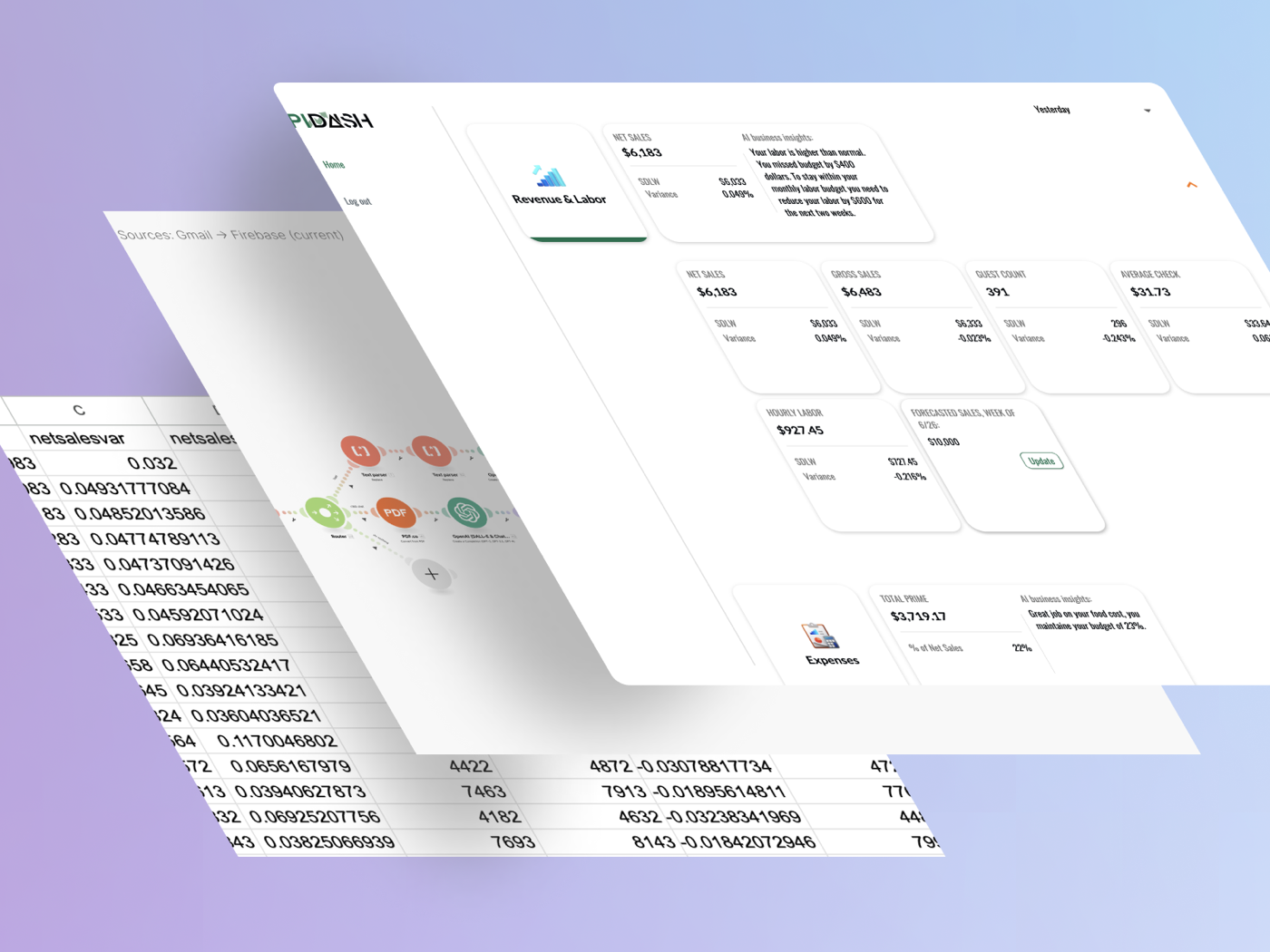
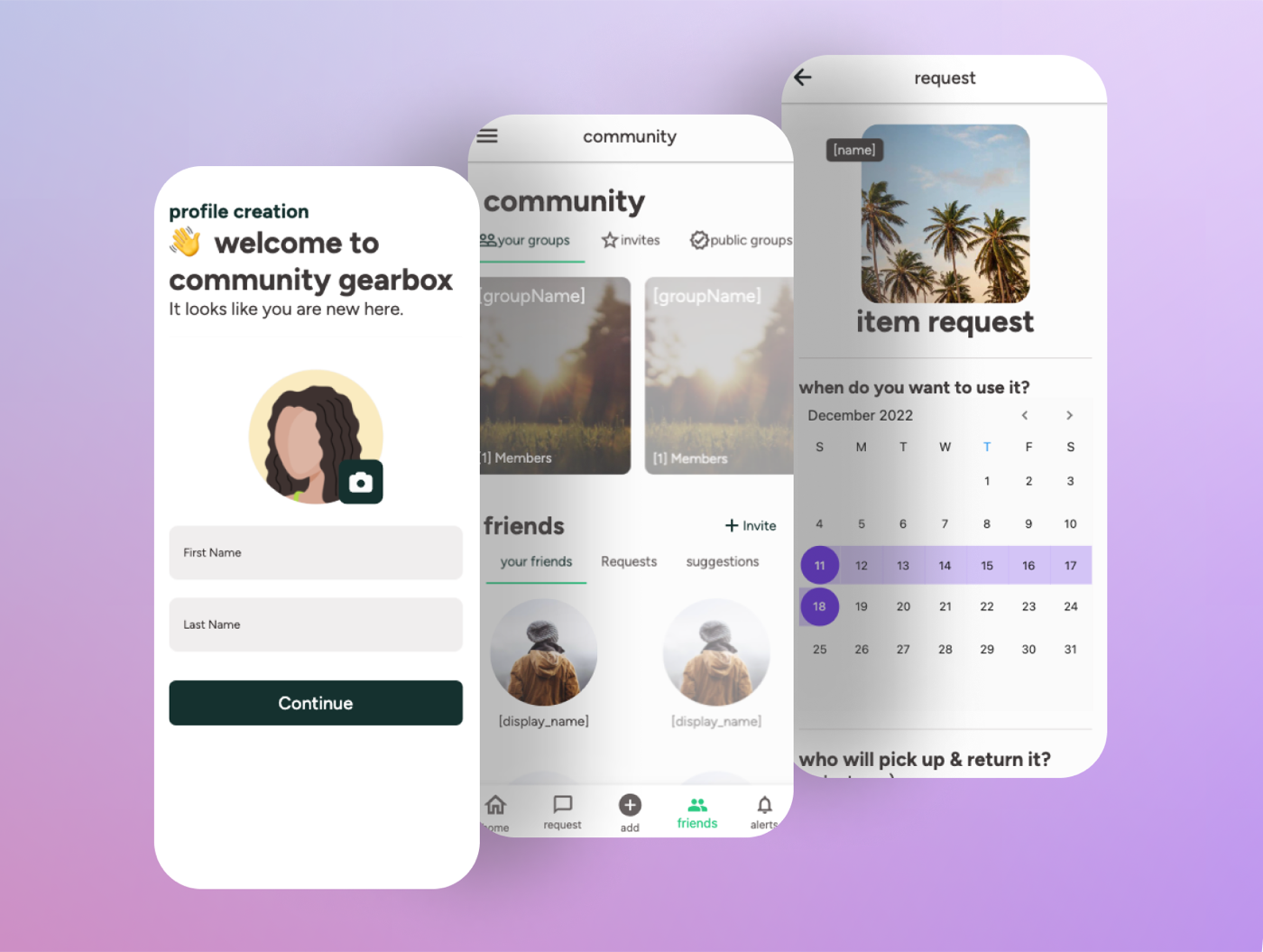
If your Bubble app also ships to the App Store and Google Play, or you want one codebase for web and mobile, Flutter on Firebase is the other route, and the stack behind most of our case studies. KPI Dash, an AI-powered web app built in Flutter on Firebase, shipped 15 features in four weeks of development, with data arriving by email forward through Make and plain-language insights from OpenAI. Community Gearbox is a two-sided Flutter app we built in six weeks, and because Flutter also builds for the web, its founder published an early web version people could click through.
Weighing the options? Our guide to the best stack after no-code compares Flutter + Firebase with React + Supabase.
Either way, code export stops being a feature you wish for, because the code has lived in your repository since the first commit.
[Other platforms]
[Exports and stacks]
Built it with Lovable, Bolt, v0, or Replit instead? See AI prototype to production →
[FAQs]
Every migration starts with a two-week strategy sprint for a flat $4,000, refunded in full if we don't move forward together. We map your current app into a features table and scope the rebuild, and we quote the build from that scope. The price is set and approved at the end of the sprint, and that's what you pay. Cost scales with the number of workflows, data types and plugins, and with our AI-accelerated process a build typically costs a fraction of what a traditional agency charges for a comparable rebuild.
Two weeks for the sprint, then about 6 weeks for most builds, versus the roughly 6 months a traditional from-scratch rebuild takes. Your live Bubble app is a complete, testable spec, which removes most of the discovery and requirements churn. Apps with unusually deep workflow logic or very large datasets take longer, and the sprint tells you how much.
No. Bubble's manual says its apps can only run on the Bubble platform, with no way to export them as code. Your data comes out through CSV export on paid plans and through the Data API, and the logic is rebuilt once, as code in your own repository.
No. Accounts, emails, profiles and everything attached to them migrate intact. Passwords are the one exception: Bubble stores them as salted one-way hashes that even Bubble can't read, so each user sets a new password once, through a reset link or magic-link sign-in, on their first visit to the new app.
No. Your Bubble app stays live and fully working for the whole build; we work beside it, not on top of it. We sync data across, test the new app against production-shaped records, and only point your domain at it once everything has been verified. The final sync runs in a low-traffic window, so users simply arrive at the new app.
Yes. Bubble builds its native apps with React Native and publishes them under your own Apple and Google developer accounts. We rebuild the app in Flutter or React Native on your new backend and, where the bundle ID and signing setup allow, ship it as an update to the same store listings, so existing users don't have to find a new app.
[Interested?]