DreamLabs
DreamLabs
DreamLabs
[Who we are]
Reach the App Store, Google Play and the web from one TypeScript stack: DreamLabs designs and builds React Native apps and React and Next.js web apps for founders and teams, and you own the code. It starts with a two-week, $4,000 strategy sprint that scopes your first release and sets the build timeline; most DreamLabs builds ship about 6 weeks after it.
As a fractional product team, we start by defining your vision and sharpening your strategy. We don’t just say “yes,” but always ask “why?”, helping your dev budget go further and faster.
We use AI-accelerated development to help teams of all sizes launch custom, scale-ready digital products. Most builds ship in about 6 weeks, not 6 months.
User testing is a bonus service we offer to all clients for free. This means we learn together from real users with each release.
[What We Do]
Everything is TypeScript end to end, so types run from your database schema and API layer to the screen, and the code AI helps write is checked by the compiler and by a senior engineer before it ships.
On mobile, we build on Expo where it fits, the framework React Native's own docs recommend for new apps. EAS Build compiles and signs the iOS and Android apps in the cloud, EAS Submit uploads them to the App Store and Google Play, and when a feature needs native code, the Expo Modules API lets us write it in Swift and Kotlin. EAS Update can ship JavaScript bug fixes between store releases; anything that adds or changes a feature goes through App Store review, as Apple's Guideline 2.5.2 requires and Expo's own documentation reminds developers.
On the web, we build in React and Next.js, which can prerender a static shell of each page at build time and stream personalized data in at request time, so the first response is real HTML that search engines can index. We test on physical iOS and Android devices from the first sprint, and we lean on proven libraries for payments, auth, maps, notifications and analytics instead of rebuilding infrastructure your users will never see.
[Deliverables]
A production app for iOS and Android built from one React Native and TypeScript codebase that renders native platform UI, not a web page in an app shell. We handle architecture, features and native integrations, from camera, location and push notifications to payments, then build and submit through Expo's EAS tooling, with TestFlight and Google Play testing before release. After launch, EAS Update can fix JavaScript bugs without waiting for a store release; new or changed features go through review.
Web applications in React and Next.js, from SaaS products and customer portals to internal dashboards, with prerendered pages where speed and search matter. Screens come from a typed component library built on your brand, so every screen we ship, and every screen your team ships after us, uses the same parts.
When you need an app and a website, we structure the build around one shared TypeScript core from day one: business logic, API clients, validation and design tokens written once and used in your iOS and Android apps and your React web app. Behind it, we build the Node.js services, APIs, databases and integrations, typed from the database schema to the screen, so whole classes of bugs are caught before they ship.
[FAQs]
Every project starts with a two-week strategy sprint for a flat $4,000, refunded in full if we don't move forward together. It delivers a features table, wireframes for your core flows and the scope of your first release, and we quote the build from that scope. React Native and React let the work be done once in one TypeScript stack instead of once per platform, and our AI-accelerated process compresses the scaffolding, boilerplate and testing, so a typical DreamLabs build costs a fraction of what a traditional agency charges.
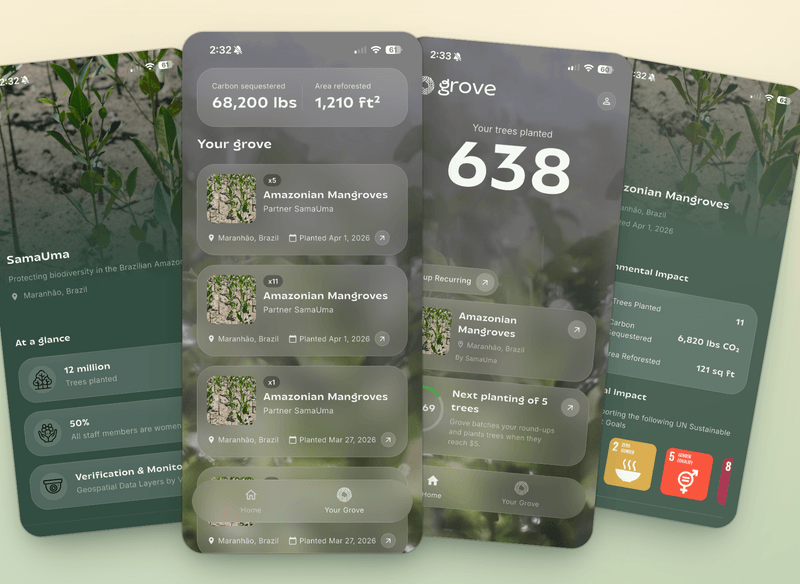
The sprint takes two weeks and sets your build's timeline from its scope. Most DreamLabs builds ship about 6 weeks after it, against the roughly 6 months a traditionally staffed build takes. Grove's mobile app, a Flutter build, went from idea to both app stores in six weeks, and a React Native build follows the same plan. You see working screens on real devices in the first weeks, and Expo's EAS Build and EAS Submit compile, sign and upload the store builds from the cloud.
Yes. React Native renders to native platform UI rather than a web view, and its own site shows Microsoft Office, Outlook and Teams, Amazon Shopping, Shopify, Coinbase and Discord among the apps that use it. Since February 2026 it has belonged to the React Foundation, an independent foundation hosted by the Linux Foundation, with Meta, Microsoft, Amazon and Expo among its founding members. And because JavaScript has been Stack Overflow's most-used language for 12 years running, the codebase we hand you can be maintained by a large pool of JavaScript and TypeScript developers, including ones you already employ.
Choose React Native if your developers already write React and TypeScript, if you want your app and a React website to share code, or if your app should use each platform's own native UI. Choose Flutter if you want one design rendered consistently on every device, or the stack behind most of the apps we've published; see our Flutter page. Either way, you own the code. And if your React team only needs a native module or two, a specialist contractor may serve you better than a full product team.
[01] Product Strategy
We start by helping you define your long and short-term product visions. We then break down the concepts into concrete features and functions, so we can piece them back together into a prioritized roadmap.
[02] Development
With the framework pinned down, we go heads-down on execution. We leverage AI-powered tooling and a modern React and React Native stack, on Expo where it fits, to develop your product in record time.
[03] Polishing + Launch QA
We put your product through rigorous QA to ensure every feature works seamlessly, every detail is pixel-perfect, and your copy is publication-ready. Then we manage the full launch process — mobile, web, or both.
[Explore Mobile App Development]