DreamLabs
DreamLabs
DreamLabs
[Cost guide]
Put version one in users' hands on a budget you can defend. For founders budgeting a first release: market build costs, the monthly bills that start at launch, and how to compare quotes. DreamLabs plans and builds first releases as your fractional product team: a $4,000 two-week strategy sprint sets your build price before you commit, and most builds take about 6 weeks after it.
Start with a strategy sprint[At a glance]
| Cost line | What it costs | What moves it |
|---|---|---|
| Building version one | Most projects reviewed on Clutch: $10,000–$49,999; average $90,780 | Features, user types, platforms, integrations and design depth |
| Planning the build (DreamLabs) | $4,000 two-week strategy sprint, refunded in full if we don't move forward together | Ends with a first-release scope and a build price you approve |
| App store accounts | Apple Developer Program $99 a year; Google Play $25 once | Fixed; open them in your company's name |
| Store fees on digital sales | Apple: 15% in its Small Business Program (up to $1M a year). Google Play, US users: 10% plus a 5% billing fee on the first $1M | Only digital features sold in the app; physical goods and services are paid outside store billing |
| Card payments | Stripe: 2.9% + 30¢ per successful domestic card transaction | Payment volume |
| Backend and hosting | Firebase: free tier, then pay as you go. Supabase: free, or Pro from $25 a month | Active users, reads and writes, storage |
| AI features | $0.10 to $10 per million input tokens and $0.50 to $50 per million output tokens, by model | Model choice, prompt length and requests per user |
| Text messages | Twilio: $0.0083 per US text, plus carrier fees | Sign-in volume |
| Maintenance | A monthly budget, not optional: both stores keep raising their technical minimums | OS releases, store rules, dependencies and bug fixes |
[The real number]
This guide is for founders and product leads budgeting a first release. The short answer is two numbers. The build is a one-time cost that market data puts in the tens of thousands of dollars for most app projects. The run cost starts the day you launch and grows with your users: store fees, hosting, payments, text messages and, if your product uses AI, model tokens. At DreamLabs, every project starts with a two-week strategy sprint for a flat $4,000 that scopes your first release; the build price is set and approved at the end of it, and most builds take about 6 weeks. Every market figure below links to its source and was checked on October 8, 2026.
Clutch's 2026 app pricing data, drawn from verified client reviews, finds that most app development projects cost between $10,000 and $49,999, with an average project cost of $90,780 and a typical timeline of about 11 months. The range is wide because "MVP" covers everything from a clickable prototype to a two-sided marketplace with payments. Rates explain part of it: app developers reviewed on Clutch average $25 to $49 an hour, US software development companies $50 to $99, and an in-house software developer earns a median salary of $135,980 before benefits (BLS, May 2025). Our agency vs freelancer vs in-house guide compares those paths in full.
Scope explains the rest, and scope is the part you control:
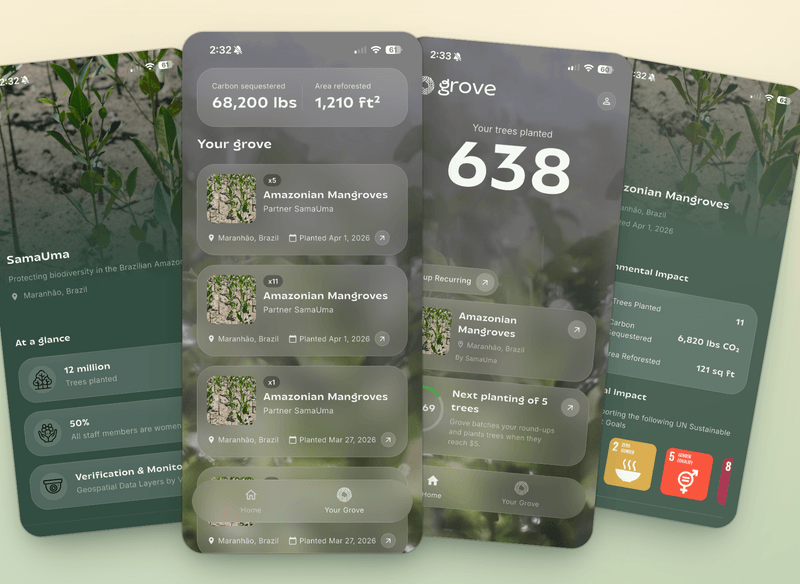
Run costs are easy to leave out of a build quote, because they aren't the agency's invoice: they're your bills, on your accounts. Grove, the product our founders co-founded and we maintain, shows the typical line items: it runs on Firebase, connects cards through Plaid, moves round-ups by ACH through Stripe and sends sign-in codes through Twilio, on both app stores. What each kind of line item costs today:
Most of these start on free tiers and grow with your users, so the number to watch is cost per active user, not this month's bill.
Model providers bill per million tokens, and a token is roughly three-quarters of an English word (Anthropic). At standard rates, OpenAI lists gpt-6-luna at $0.10 per million input tokens and $0.50 per million output tokens, and its flagship gpt-6-astra at $10 and $50. Anthropic lists Claude Haiku 5.5 at $0.10 and $0.50 and Claude Fable 5.1 at $10 and $50; Google lists Gemini 3.5 Flash-Lite at $0.30 and $2.50.
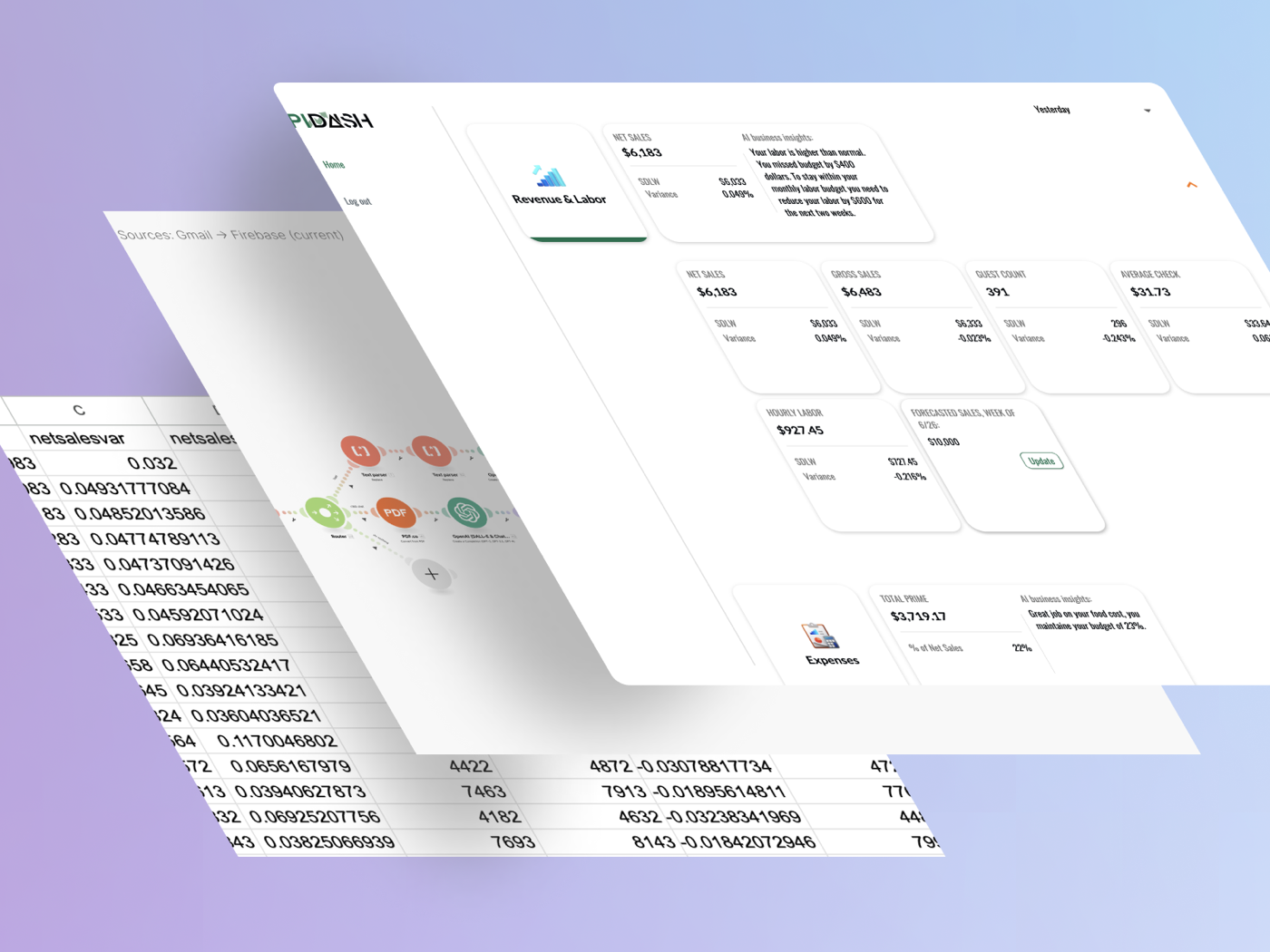
A worked example, with our own arithmetic: 1,000 daily users who each make 10 AI requests a day, at 2,000 input tokens and 500 output tokens per request, add up to 600 million input and 150 million output tokens a month. That's about $135 a month on models priced at $0.10 and $0.50 (gpt-6-luna, Claude Haiku 5.5), $555 on Gemini 3.5 Flash-Lite, $2,700 on mid-tier models priced at $2 and $10 (OpenAI's gpt-6.1-sol, Claude Sonnet 5.5), and $13,500 on the flagships. OpenAI and Anthropic both list batch prices at half their standard rates for work that doesn't need an instant answer. Picking the model per feature, and capping requests per user, is a product decision to make before launch. UNALTERED, the AI personal trainer app we built, uses OpenAI and Gemini to generate meal and workout ideas; KPI Dash uses OpenAI to explain a manager's numbers in plain language.
An app that isn't updated eventually can't be. Since April 28, 2026, apps uploaded to App Store Connect must be built with Xcode 26 or later using the iOS 26 SDK; since August 31, 2026, new apps and app updates on Google Play must target Android 16 (API level 36), with extensions available to November 1, 2026. Both stores keep raising these minimums, on top of dependency updates, bug fixes and what your users ask for, so budget for it monthly. Two apps we built show the rhythm: Grove, our own product, shipped 12 updates between its App Store launch on February 3, 2026 and August 13, and Nurture, on the App Store since March 2023, was still receiving updates in September 2026.
Hourly billing leaves the risk of a growing scope with you. A fixed price moves it to the builder, which only works when the scope is written down first. So ask any "fixed-price MVP" offer how the scope gets defined before the price is set, and how a change is priced when you change your mind mid-build. Our answer is to spend two weeks on the scope before anyone writes code, then price that scope once.
[Comparing quotes]
[01]
Quotes only compare when they price the same thing. Give every vendor the same features table: each user type, each screen and each integration. A vendor who prices it without asking a single question is guessing.
[02]
Ask whether design, QA, app store publishing, user testing and post-launch fixes are in the price, and who pays the store fees, hosting, payment fees and AI usage. Those run costs are yours either way, so budget them now.
[03]
Hourly pricing leaves the risk of a growing scope with you. A fixed price moves it to the builder, but only for the scope written down. Ask how a change request is priced before you need one.
[04]
Under US copyright law, work from outside contractors generally stays with its author unless it is assigned in a signed writing. Put an assignment of code and designs in the contract, and keep the store accounts, cloud projects and domain in your company's name.
[05]
Add twelve months of hosting, store fees, AI usage and maintenance to each build quote. The cheapest build can turn into the most expensive year if it leaves you rebuilding.
[How we price]
DreamLabs is an AI-powered app development agency in California that works as a fractional product team, from strategy to launch. Tomás Quiñonez-Riegos leads product and John Krueger leads development (meet the founders). We don't just say yes, we ask why, and on a budget that question is worth money: every feature cut from version one is a feature you don't pay to build or to maintain.
Zach Muñoz, co-founder of UNALTERED: “DreamLabs is always straightforward and honest about the work they do and the associated cost to do it. I have never felt like I was being taken advantage of.”
[Cost and timeline guides]
Still deciding who should build it? Compare agency, freelancer, in-house and fractional paths →
[FAQs]
It depends on scope more than anything else. Clutch's 2026 data, drawn from verified client reviews, puts most app development projects between $10,000 and $49,999, with an average project cost of $90,780 and a typical timeline of about 11 months. A clickable prototype costs far less than a two-sided marketplace with payments, which is why published ranges are so wide. Write a features table first, then get it priced.
The fixed costs are small: Apple's developer program is $99 a year and Google Play charges $25 once. Usage costs grow with your users. Firebase and Supabase both start free (Supabase Pro is from $25 a month), Stripe charges 2.9% + 30¢ per domestic card payment, Twilio lists $0.0083 per US text message plus carrier fees, and AI features bill per token. Add the store's share if you sell digital features in the app, and a monthly maintenance budget.
A fixed price means the builder, not you, carries the risk of the work taking longer than planned. It only works when the scope is written down first, so the real questions are how that scope gets defined and how changes are priced. At DreamLabs, a two-week strategy sprint produces the features table, wireframes and first-release scope, and the build price is set and approved at the end of the sprint. That's what you pay.
Per million tokens, list prices run from $0.10 for input and $0.50 for output on low-cost models such as OpenAI's gpt-6-luna and Anthropic's Claude Haiku 5.5, up to $10 and $50 on the flagships. In our worked example, 1,000 daily users making 10 requests a day costs about $135 a month on the low-cost models and about $13,500 on the flagships, so choose the model per feature and limit requests per user.
Every project starts with a two-week strategy sprint for a flat $4,000, refunded in full if we don't move forward together. The sprint delivers a features table, UX wireframes for your core flows and the scope of your first release. The build price is set and approved at the end of the sprint, and that's what you pay. Most builds take about 6 weeks.
Yes, if you're still testing demand. A landing page, a clickable prototype or an AI app builder costs far less than a coded product. We took Nowhere Collective from a vision to a clickable Figma prototype in four weeks without writing code, and the founder took it into user testing. Build the real product once people show they want it.
Budget it monthly, not as a surprise. Both stores keep raising their technical minimums: App Store uploads have required Xcode 26 since April 28, 2026, and Google Play updates have had to target Android 16 since August 31, 2026. Add dependency updates, bug fixes and the features users ask for. The right figure depends on how fast you plan to ship, which is why we price ongoing work from your roadmap.
[Interested?]