DreamLabs
DreamLabs
DreamLabs
[Cost guide]
Get buyers and sellers transacting on a budget you can defend. For founders launching a two-sided marketplace, this guide prices every line it pays for, from Stripe Connect payouts to trust and safety, search and admin tools, with fees checked October 8, 2026. DreamLabs builds marketplaces as your fractional product team: a $4,000 two-week strategy sprint scopes version one and sets the build price, and most builds take about 6 weeks after it.
Start with a strategy sprint[At a glance]
| Cost line | What drives it | Published prices | In version one? |
|---|---|---|---|
| Payments and payouts | Who pays the processing fees, how often sellers get paid, refunds and disputes | Cards 2.9% + 30¢ per charge (Stripe). Stripe Connect: no platform fees if Stripe bills your sellers directly; $2 per monthly active seller account plus 0.25% + 25¢ per payout if you set the pricing | Yes, if money changes hands in the app |
| Trust and safety | Store-required reporting and blocking, moderation, identity checks, fraud and disputes | ID check $1.50 each (Stripe Identity); $15 per card dispute; Radar Lite fraud screening included with standard Stripe pricing; OpenAI's moderation model is free | Reporting, blocking and terms: yes, both stores require them. Paid checks: when strangers transact |
| Search and discovery | Catalog size, filters, typo tolerance and ranking | Full-text search built into Postgres (Supabase); Firestore text search needs Enterprise edition; Algolia: 10,000 searches a month included, then $0.50 per 1,000 | Filters and simple search; hosted search once the catalog grows |
| Admin tools | Approving sellers and listings, refunds, disputes, payouts and analytics | Build effort. Stripe's prebuilt and embedded dashboards for connected accounts carry no fee | A lean operator console |
| Messaging and notifications | In-app chat, push, SMS and email confirmations | Push through Firebase Cloud Messaging: no cost. SMS from $0.0083 per segment plus carrier fees (Twilio) | Push and email; SMS where a missed message costs a sale |
| Hosting and data | Reads, writes, storage and monthly active users | Firestore free quota: 50,000 reads and 20,000 writes a day. Supabase Pro from $25 a month | Yes; usually small at launch |
| App stores | Developer accounts; store billing applies only to digital goods | Apple $99 a year; Google Play $25 once. Physical goods and services stay out of store billing | Yes, for mobile apps |
| Taxes and reporting | Seller payout volume, what you sell and where | $2.99 per 1099 e-filed with the IRS if you set Connect pricing; Stripe Tax 0.5% per transaction (no-code) or 50¢ (API) where you're registered | Plan for it; switch on as volume grows |
[Cost drivers]
A marketplace is two products sharing one transaction: every buyer feature has a seller feature behind it, money moves between people who don't know each other, and both app stores set rules for what users post. For context, app projects reviewed on Clutch typically cost $10,000 to $49,999 and take about 11 months, across all kinds of apps, and the BLS median salary for a software developer was $135,980 in May 2025. Five lines move your number. Every price below links to its source and was checked on October 8, 2026.
Card processing is the floor. Stripe's standard rate is 2.9% + 30¢ per successful domestic card charge, plus 1.5% for international cards. Buy now, pay later through Klarna costs 5.99% + 30¢, and each card dispute costs $15. Paying sellers adds a second layer, and Stripe Connect offers two models. If Stripe bills your sellers directly for processing, your platform pays no account, payout or tax-reporting fees. If you set the pricing yourself, the model Stripe recommends for marketplaces, you pay $2 for each account that receives a payout that month, plus 0.25% + 25¢ per payout sent, and you collect your own fee on every transaction.
Run those numbers against your take rate before you build. An illustration, not a quote: on a $100 order where your platform keeps a 10% commission and pays the processing, the card charge costs $3.20 and Stripe's headline fee on a single $90 payout is about 48¢, leaving roughly $6.33 of your $10 before the $2 monthly fee per paid seller. Stripe's comparison table also lists a 0.25% funds-routing fee on payout volume under this model, another 23¢ here if it applies on top, so confirm your total with Stripe. Who absorbs the card fee and how often sellers get paid move that math more than most features do.
App store commissions usually stay out of it. Apple's App Review Guideline 3.1.3(e) requires apps that sell physical goods or services used outside the app to take payment some other way than in-app purchase, and Google Play's payments policy says its billing system must not be used for physical goods, physical services or peer-to-peer payments. Sell digital goods that are used inside the app, though, and in-app purchase and the store's commission apply.
Both app stores make part of this mandatory. Apple's Guideline 1.2 requires apps with user-generated content to filter objectionable material, let users report content and get timely responses, block abusive users, and publish contact information. Google Play's policy also requires users to accept your terms before they post, and requires blocking wherever users can message each other one to one. Listings, reviews, profiles and chat all count as user content, so budget for reporting, blocking and a moderation queue someone actually works.
Beyond the store minimum, spend in proportion to the risk between strangers. Stripe Identity checks an ID document and selfie for $1.50 per verification. Radar Lite's AI fraud screening for card payments is included at no additional charge on standard Stripe pricing, and Radar plans for platforms and marketplaces start at $20 a month. OpenAI lists its moderation model, omni-moderation-latest, as free, so automated screening of listings and messages costs little. The human review behind it is the real cost.
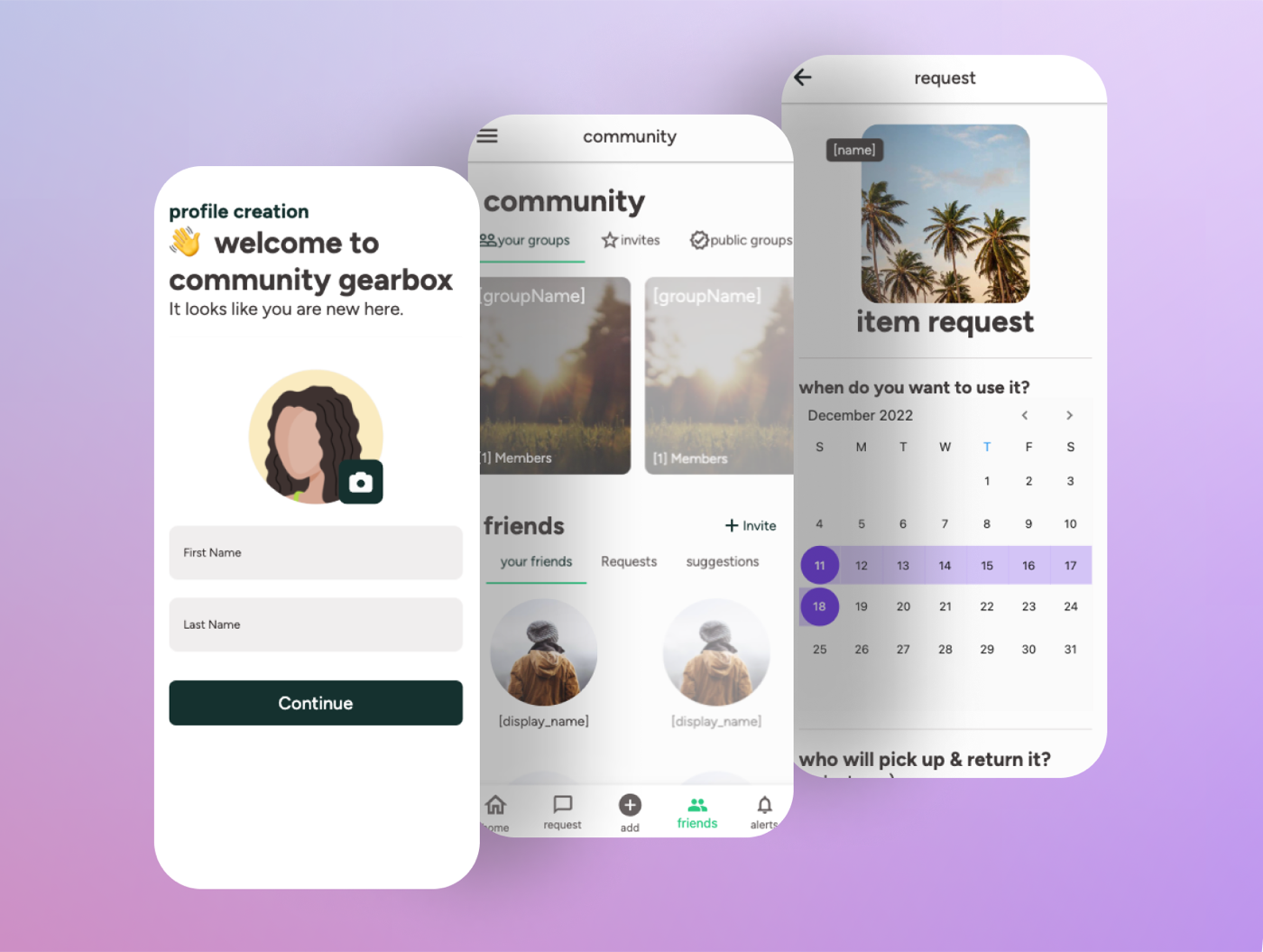
Trust can also be designed in. Community Gearbox, a two-sided gear-sharing app we built, keeps sharing inside circles where trust already exists: what members can see and borrow depends on who they know and which groups they belong to, and community managers set who can see each item and each group. Its request screen asks when the borrower wants the item, as a date range, and who will pick it up and return it. Designing around the handoff people actually make can cost less than verifying strangers.
What search costs depends on your backend and your catalog. Postgres, the database behind Supabase, has full-text search built in. On Firebase, Firestore's text search requires an Enterprise edition database, so an app on the Standard edition needs that upgrade or a hosted search service. Algolia's pay-as-you-go Grow plan includes 10,000 search requests and 100,000 records a month, then charges $0.50 per 1,000 searches and $0.40 per 1,000 records. With a few hundred listings, filters and simple search are often enough: Community Gearbox shipped with explore, search and filter for items, plus group search and a way to find friends.
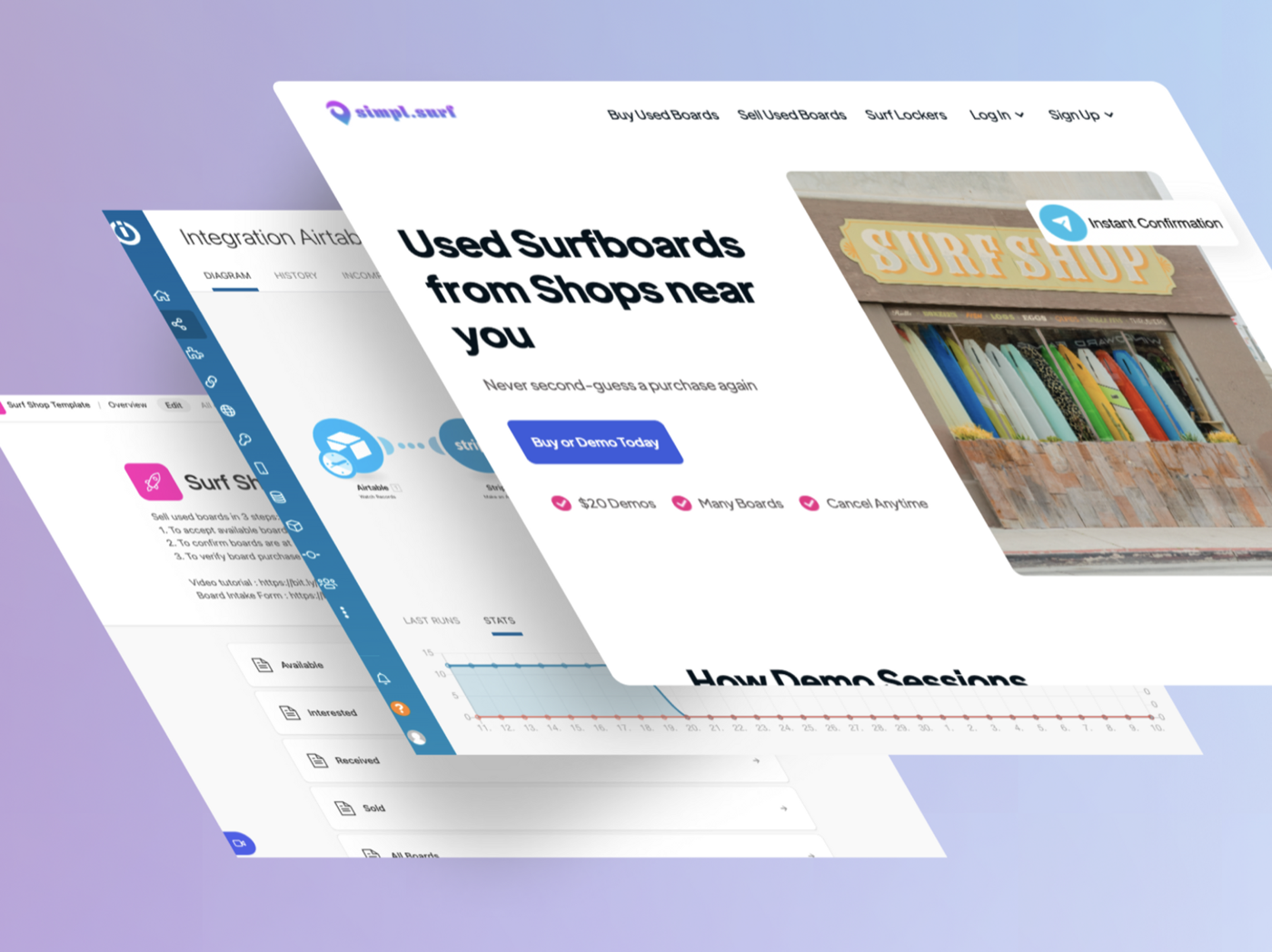
Every marketplace needs a back office for approving sellers and listings, refunds, disputes, payouts and removing bad actors. It's easy to leave out of a budget, and it decides how many hours a week running the marketplace takes. Stripe Connect's prebuilt and embedded dashboards for connected accounts carry no fee, so seller payout screens don't have to be built from scratch. For SimplSurf, a consignment marketplace for used surfboards, the back office was an Airtable Interface where surf shop managers accepted new boards, confirmed boards were ready to sell and viewed sale analytics, with boards sorted into views such as Available, Interested, Received and Sold.
Most of the monthly bill scales with use and starts small. Firestore's free quota covers 50,000 document reads and 20,000 writes a day, and Supabase Pro starts at $25 a month with 100,000 monthly active users included. Push through Firebase Cloud Messaging is no-cost, SMS on Twilio costs $0.0083 per segment plus carrier fees, and store accounts cost $99 a year with Apple and a one-time $25 with Google Play. The larger line is the work itself: fixing what users find, keeping up with store policy, and building what the first transactions teach you.
[How to budget]
[01]
One kind of buyer, one kind of seller, one thing changing hands. Reviews, promoted listings and loyalty perks can wait until that transaction works and both sides come back for it.
[02]
Pick a Stripe Connect model, then run your take rate against card fees, payout fees and the monthly fee per paid seller. If the margin doesn't survive the math, change the model before you build it.
[03]
Both app stores require reporting, blocking and terms for user content, and Apple requires published contact information. Add identity checks, fraud tools and dispute handling in proportion to the risk between your users.
[04]
Our two-week, $4,000 strategy sprint delivers a full features table, UX wireframes for your core flows and the scope of your first release. The build price is set and approved at the end of the sprint, and that's what you pay. The sprint is refunded in full if we don't move forward together.
[Where we fit]
DreamLabs is an AI-powered app development agency in California that works as a fractional product team, from strategy to launch. Tomás Quiñonez-Riegos leads product and John Krueger leads development (meet the founders). We don't just say yes, we ask why, and on a marketplace that usually means cutting version one down to the transaction it has to prove.
Dante Garcia, founder and CEO of Community Gearbox: “They helped me create clarity and a scope of work from what was just an initial idea.”
[Cost and timeline guides]
Still deciding who should build it? Compare agency, freelancer, in-house and fractional paths →
[FAQs]
It depends on how much of the transaction you build. App projects reviewed on Clutch typically cost $10,000 to $49,999 across all kinds of apps. What moves the number is payments and payouts, trust and safety, search, admin tools and the second side of every feature. At DreamLabs, a $4,000 two-week strategy sprint scopes version one, and the build price is set and approved at the end of it.
Stripe offers two models. If Stripe bills your sellers directly for processing, your platform pays no account, payout or tax-reporting fees. If you set the pricing yourself, Stripe charges your platform $2 for each account that receives a payout that month plus 0.25% + 25¢ per payout sent, and you pay the card processing, which starts at 2.9% + 30¢ per successful domestic card charge, then collect your own fee on each transaction. Prices checked October 8, 2026.
Not for physical goods and services. Apple's App Review Guideline 3.1.3(e) requires apps that sell physical goods or services used outside the app to take payment some other way than in-app purchase, and Google Play's payments policy says its billing system must not be used for physical goods, physical services or peer-to-peer payments. Digital goods used inside the app are different: they go through in-app purchase, and the store's commission applies.
If users post listings, reviews, profiles or messages, Apple's Guideline 1.2 requires a way to filter objectionable material, a way to report content with timely responses, the ability to block abusive users, and published contact information. Google Play also requires users to accept your terms before posting, in-app reporting, and blocking wherever users can message each other one to one. Identity checks, fraud screening and dispute handling are your call, in proportion to the risk.
Use a platform when your model is a standard listings-and-bookings marketplace and speed matters most: Sharetribe's Live plan is $199 a month billed yearly, with no transaction fees, plus usage above its included credits. Build custom when the transaction itself is your edge, such as a handoff, a consignment or a trust model that a template doesn't fit, or when you want to own the code and the infrastructure it runs on.
With DreamLabs, two weeks for the strategy sprint, then about 6 weeks for most builds. Community Gearbox, a two-sided Flutter app, took six weeks from strategy to launch; SimplSurf's no-code consignment platform took two weeks; Nowhere Collective's clickable prototype took four. For comparison, Clutch puts a typical app project at about 11 months end to end.
Often, as it grows. The IRS requires payment apps and online marketplaces to report on Form 1099-K when a seller's payments exceed $20,000 in more than 200 transactions, and Stripe charges $2.99 per 1099 e-filed with the IRS when you set Connect pricing. In California, a marketplace facilitator is generally responsible for collecting, reporting and paying sales tax on retail sales made through its marketplace for delivery to California customers. This is general information, not tax advice.
Every project starts with a two-week strategy sprint for a flat $4,000, refunded in full if we don't move forward together. It delivers a full features table, UX wireframes for your core flows and the scope of your first release. The build price is set and approved at the end of the sprint, and that's what you pay.
[Interested?]