DreamLabs
DreamLabs
DreamLabs
[Cost guide]
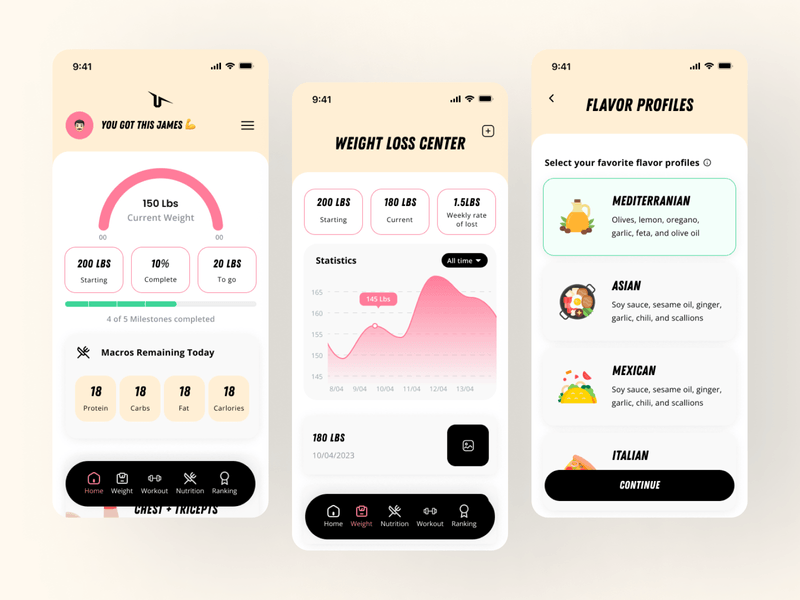
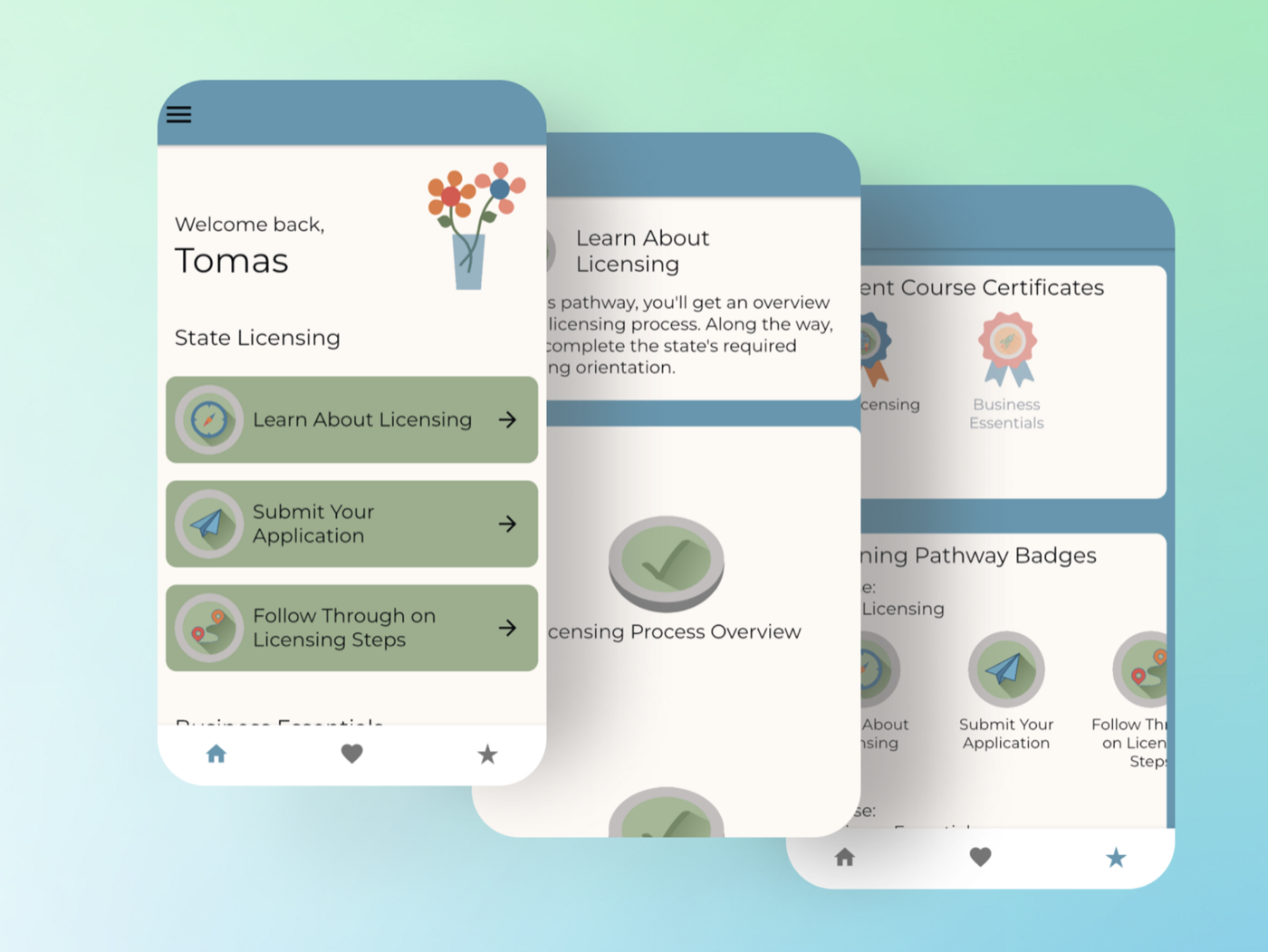
Give every member a coach that plans their meals and workouts, at a cost per user you can predict. For founders and fitness brands building an AI fitness or coaching app, this guide prices each line: AI usage, Apple Health and Health Connect, wearables, content and store fees, checked October 8, 2026. DreamLabs built UNALTERED, an AI personal trainer app live on both stores. Every project starts with a $4,000 two-week strategy sprint, and most builds take about 6 weeks after it.
Start with a strategy sprint[At a glance]
| Cost line | What drives it | Published prices | In version one? |
|---|---|---|---|
| AI features | Which model, how many requests each active member makes, and how long each prompt and answer is | OpenAI gpt-6-luna $0.10 / $0.50, gpt-6.1-sol $2 / $10, gpt-6-astra $10 / $50. Gemini 3.8 Flash $0.75 / $3.75 through 2026, $1.50 / $7.50 from January 1, 2027 | Yes: one or two AI features, on the smallest model that does them well |
| Apple Health and Health Connect | Which data types you read and write, background sync and permission flows | No fee to use either. Google Play requires a Health apps declaration with a justification for each data type | Usually; request only the data types a feature uses |
| Direct wearable APIs | Each brand's sign-in, data format and platform changes | Garmin: business use, no licensing or maintenance fees for access. Fitbit Web API turns off October 30, 2026; users re-consent through the Google Health API | Often later, when members ask for a specific device |
| Content | Exercise videos, programs, nutrition data and expert review | Video: $5 per 1,000 minutes stored a month, $1 per 1,000 minutes delivered (Cloudflare Stream). USDA nutrition data: public domain | A focused library the AI draws on |
| Subscriptions and store fees | Where members pay and how long they stay | Apple keeps 30% in a subscriber's first year, 15% after a year or in its Small Business Program. Google Play (US): 10% plus a 5% billing fee | Yes, if members pay in the app |
| Privacy and compliance | Health data, third-party AI and breach rules | Apple requires disclosure and explicit permission before personal data goes to third-party AI. FTC civil penalties up to $53,088 per violation | Yes, from the first release |
| Hosting and search | Members, logs, stored media and searchable catalogs | Firestore free quota: 50,000 reads a day. Supabase Pro from $25 a month. Algolia: 10,000 searches a month included | Yes; usually small at launch |
[Cost drivers]
An AI fitness app has a cost most apps don't: every active member runs up a usage bill, every month, for as long as they stay. It also handles some of the most sensitive data a phone holds, and Apple, Google and the FTC each have rules for it. For context, app projects reviewed on Clutch typically cost $10,000 to $49,999, with health and wellness work averaging $25 to $49 an hour. The lines below decide where yours lands. Every price links to its source and was checked on October 8, 2026.
AI providers charge per token, a fragment of a word, for what you send and what comes back, and model choice moves the bill by orders of magnitude. On OpenAI's pricing page, standard rates per million tokens are $0.10 in and $0.50 out for gpt-6-luna, $2 and $10 for gpt-6.1-sol, and $10 and $50 for gpt-6-astra. Google's Gemini 3.8 Flash costs $0.75 in and $3.75 out through December 31, 2026, then $1.50 and $7.50 from January 1, 2027. Both providers bill a model's thinking tokens as output, so a model that reasons longer costs more per answer. Batch processing, for work that can wait such as next week's plan, is half price for these models on both.
Price one active member before you pick a model. An illustration with assumed numbers, not measurements from any client app: a member who generates 30 meal ideas and 4 workout plans a month, at about 2,000 tokens in and 1,500 out per request, sends 68,000 tokens and receives 51,000. That costs about 3¢ a month on gpt-6-luna, 24¢ on Gemini 3.8 Flash (48¢ from January), 65¢ on gpt-6.1-sol and $3.23 on gpt-6-astra. At 10,000 active members, that's roughly $323 a month on the smallest of those models and $32,300 on the largest. A chat coach that resends the whole conversation with every message costs more than these one-off requests, so measure real token counts in testing.
Pick the tier with your members' data in mind. OpenAI says data sent to its API isn't used to train its models unless you opt in, and Google's Gemini pricing page marks free-tier content as used to improve its products and paid-tier content as not. Apple's Guideline 5.1.2(i) requires apps to clearly disclose where personal data will be shared with third parties, including third-party AI, and to get explicit permission first. UNALTERED, the AI personal trainer app we built, uses OpenAI and Gemini to power its AI meal and workout ideas.
Neither platform charges to connect, so the cost is engineering and paperwork. On iPhone, HealthKit keeps all health data on the user's device, asks permission separately for each data type, and encrypts its store when the phone locks, so your app may not be able to read it in the background. Apple requires a privacy policy for any HealthKit app, bars using HealthKit data for advertising, and allows sharing it with a third party only with the user's express permission and, medical research aside, only if that party also provides a health or fitness service to the user. Under Guideline 5.1.3, apps may not store personal health information in iCloud.
On Android, Health Connect works on Android 9 (API level 28) and up, and your app has to check that it's available on the device. Before you publish, Google Play requires a Health apps declaration with a clear justification for each data type you request, and your store privacy policy must match the one members see in Health Connect. Request only the data types a feature actually uses, because a new data type means filing again.
Direct device APIs can surprise an integration budget, because each brand has its own sign-in, data format and roadmap. Garmin's developer program is for business use only, with no licensing or maintenance fees for access, though some metrics can require a license fee, and Garmin puts a typical integration at 1 to 4 weeks. Platforms also change under you. Google stopped new sign-ups for the Google Fit APIs on May 1, 2024 and says they will be deprecated in 2026, and the Fitbit Web API will be turned off on October 30, 2026; tokens can't move to its replacement, the Google Health API, so members have to consent again. Budget for changes like these after launch, not only for the first connection.
AI writes the plan; content makes it credible. UNALTERED pairs AI-generated workout ideas with an exercise library of tutorial videos. Video is inexpensive to start: Cloudflare Stream charges $5 a month per 1,000 minutes stored and $1 per 1,000 minutes delivered, with free encoding. USDA FoodData Central nutrition data is public domain, with an API limited by default to 1,000 requests an hour. The bigger line is expertise. Someone qualified should write or review the programs the AI draws on; the BLS median wage for fitness trainers and instructors was $22.67 an hour in May 2025. If your app makes claims about health measurements, Apple's Guideline 1.4.1 requires you to disclose the data and methodology behind them.
If members pay inside the app, the stores take a share. Apple pays developers 70% of an auto-renewable subscription's price in the subscriber's first year and 85% after a year of paid service, and developers in its Small Business Program (new to the store, or up to $1 million in proceeds the prior year) receive 85% from the start. Google Play charges US auto-renewing subscriptions a 10% service fee plus a 5% billing fee when they're bought through Google Play Billing. On the US storefront, Apple's guideline 3.1.1(a) lets apps include buttons and links to buy on the web. Under guideline 3.1.3(d), live one-to-one training between two people may be paid outside in-app purchase in any storefront, while one-to-few and one-to-many live sessions must use it. Developer accounts cost $99 a year with Apple and a one-time $25 with Google Play.
The FTC notes that many companies that collect health information, fitness trackers and diet apps among them, fall outside HIPAA, and its Health Breach Notification Rule can cover them instead. Its own example is a fitness app where users enter their height, weight and age and can sync a wearable: "You are likely a vendor of personal health records." Under the rule, sharing users' health information without their consent is a breach, not only a hack, and violations can bring civil penalties of up to $53,088 each. Build consent, data minimization and in-app account deletion, which Apple's Guideline 5.1.1(v) requires of any app with account creation, into version one rather than retrofitting them. This is general information, not legal advice.
[How to budget]
[01]
Planning, logging and chat cost very different amounts per member. Pick the one or two AI features that bring members back, and leave the rest for the next release.
[02]
Multiply requests a month by tokens per request and your model's price, then add store fees and video delivery. Set that against your subscription price, and you know which model you can afford.
[03]
Every data type needs a permission, a justification on Google Play and a line in your privacy policy. Start with the few that power a feature, such as weight and workouts, and add more when a feature needs them.
[04]
Our two-week, $4,000 strategy sprint delivers a full features table, UX wireframes for your core flows and the scope of your first release. The build price is set and approved at the end of the sprint, and that's what you pay. The sprint is refunded in full if we don't move forward together.
[Where we fit]
DreamLabs is an AI-powered app development agency in California that works as a fractional product team, from strategy to launch. Tomás Quiñonez-Riegos leads product and John Krueger leads development (meet the founders). We don't just say yes, we ask why, so every AI feature in your app earns its cost per member.
Zach Muñoz, co-founder of UNALTERED: “DreamLabs is always straightforward and honest about the work they do and the associated cost to do it.”
[Cost and timeline guides]
Still deciding who should build it? Compare agency, freelancer, in-house and fractional paths →
[FAQs]
It depends most on how many AI features, health integrations and content you launch with. App projects reviewed on Clutch typically cost $10,000 to $49,999. Unlike most apps, an AI fitness app also has a running cost per active member for AI usage. At DreamLabs, a $4,000 two-week strategy sprint scopes your first release, and the build price is set and approved at the end of it.
It depends mostly on the model. In our illustration, a member making 34 AI requests a month at about 2,000 tokens in and 1,500 out costs about 3¢ on OpenAI's gpt-6-luna, 24¢ on Gemini 3.8 Flash, 65¢ on gpt-6.1-sol and $3.23 on gpt-6-astra, at prices checked October 8, 2026. Chat coaches that resend long conversations cost more, so measure your own prompts in testing.
Compare models, not companies. OpenAI's gpt-6-luna costs $0.10 per million input tokens and $0.50 per million output; Gemini 3.8 Flash costs $0.75 and $3.75 through December 31, 2026, doubling on January 1, 2027. Test the cheapest models on your own prompts first, and keep member data on paid tiers, since Google marks Gemini free-tier content as used to improve its products.
Neither platform charges a fee. The cost is engineering: permission flows for each data type, syncing that works around HealthKit's limits when the phone is locked, and on Android a Health Connect availability check plus Google Play's Health apps declaration, with a justification for each data type you request. Apple also requires a privacy policy for any HealthKit app.
Not through the old APIs for long. Google says the legacy Fitbit Web API will be turned off on October 30, 2026, and existing access tokens can't be transferred to its replacement, the Google Health API, so users have to consent again. Google closed new sign-ups for the Google Fit APIs on May 1, 2024, says they will be deprecated in 2026, and points mobile Android apps to Health Connect.
Apple pays developers 70% of an auto-renewable subscription's price in the subscriber's first year and 85% after that, or 85% from the start in its Small Business Program. For US users, Google Play charges auto-renewing subscriptions a 10% service fee plus a 5% billing fee through Google Play Billing.
Often not. The FTC notes that many companies that collect health information, including fitness trackers and diet apps, fall outside HIPAA, and its Health Breach Notification Rule can apply instead: the FTC says a fitness app where users enter their own data and can sync a wearable is likely covered, and penalties reach $53,088 per violation. This is general information, not legal advice.
With DreamLabs, two weeks for the strategy sprint, then about 6 weeks for most builds. Plan for releases after launch too: UNALTERED grew to its full feature set over three releases in 13 months of development.
Every project starts with a two-week strategy sprint for a flat $4,000, refunded in full if we don't move forward together. It delivers a full features table, UX wireframes for your core flows and the scope of your first release. The build price is set and approved at the end of the sprint, and that's what you pay.
[Interested?]