DreamLabs
DreamLabs
DreamLabs
[AI builds]
Built your prototype by vibe coding in Lovable, Bolt, v0, Replit or Base44? It proved that people want it. DreamLabs, a fractional product team, turns it into a secure, tested app on code and accounts you own, keeping what already works. Start with a two-week strategy sprint for a flat $4,000, refunded in full if we don't move forward together; most builds then take about 6 weeks.
Start with a strategy sprint[What comes next]
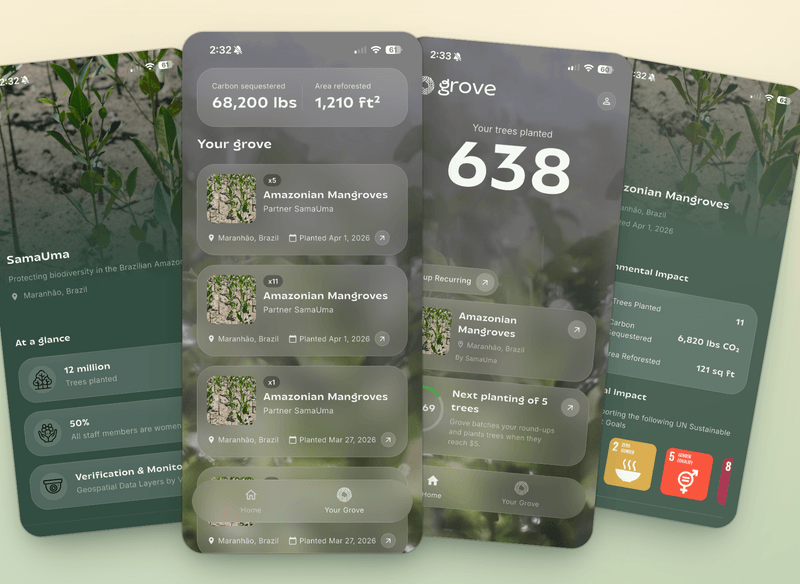
You described an app and got one back, and people are using it. That is the hard part, and these builders did it well: Lovable, Bolt, v0, Replit and Base44 turn weeks of scaffolding into an afternoon and hand you real screens, a database and a working sign-up flow. We build with AI every day too: Grove, a product our founders co-founded, was built with Claude Code as part of our workflow.
The next stage asks for different things: a security review a customer or investor can read, a repository a new engineer can clone and run, tests that catch a regression before your users do, and data in accounts your company controls. Builders optimize for a working demo, one prompt at a time, so these are often the parts still missing, and the builders leave them to you. Lovable says its security scans do not replace a thorough security review, and Replit's shared-responsibility model says you own the code Agent generates and you're responsible for it. Veracode's 2025 GenAI Code Security Report found AI-generated code introduced risky security flaws in 45% of tests.
Three things usually need work, in this order. Security: database rules that let everyone through, privileged keys in the browser bundle, permissions enforced only in the interface. Reliability: no tests, no staging, no monitoring, no rollback. Velocity: each prompt risks breaking something that worked yesterday. You can check the first one yourself today with our free Supabase RLS checklist or Firestore Security Rules checklist.
If the app is an internal tool, the data isn't sensitive, nobody has asked for a security review and you aren't hiring engineers yet, keep building in the tool. Run its built-in scans, work through the checklist, and come back when one of those changes. We ask why before we build, and sometimes the answer is not yet.
You already have real code, a real database and a running app, so the work is hardening and restructuring, not a rewrite. Each has its own guide: Lovable, Bolt and Replit.
v0 has grown from an interface generator into a full-stack builder. It defaults to Next.js, adds Supabase, Neon, Upstash or Vercel Blob through the Vercel Marketplace, and connects to GitHub with working branches, pull requests and CI checks. That makes it the closest of these builders to a normal engineering workflow, which can leave the most to keep. The work is what the prompts didn't ask for: an authorization model enforced on the server and in database policies, server actions and route handlers that validate their input, a schema with constraints and versioned migrations, payments with verified webhooks, tests, monitoring, and the database and Vercel project sitting in your company's accounts.
Base44 supplies the whole stack: its own data layer, user accounts, backend functions, integrations and hosting. On the Builder plan and up you can sync the code to GitHub or download it as a ZIP, and any table exports as CSV. But Base44 describes working with that code while still relying on the platform for infrastructure and runtime, so moving off it means rebuilding the backend: a database you own designed from your exported data, sign-in in your own auth provider, and Base44's permission settings rewritten as server-enforced rules with tests. Your running app is the specification, and it keeps serving users until a rehearsed data migration and a DNS change switch them over.
Platform details on this page were checked against each vendor's documentation on October 7, 2026.
[How it works]
[01]
Two weeks, flat $4,000, refunded in full if we don't move forward together. We map your running app into a features table, wireframe what should change, and scope the first production release. Alongside it we read the repository and the running app: every route, table and integration, what is real versus mocked, and a security pass over database rules, keys in the client bundle, server-side authorization, input validation and webhooks. Sometimes the honest answer is a short hardening job rather than a migration, and the sprint is where you hear it. You leave with findings, a plan and the scope we quote the build from.
[02]
Security and data integrity come before anything cosmetic. We close the exposures the sprint found, move authorization to the server, lock down database access with policies we actually test, rotate any key that has been sitting in a client bundle, and put real constraints and backups on your data. The risky things stop being risky first, whether or not you continue into a full restructure.
[03]
Senior engineers refactor the generated sprawl into an architecture that holds: shared components, typed models end to end, one way to fetch data instead of several, and clear boundaries between interface, logic and storage. AI speeds up the mechanical work, from refactors to type coverage and test generation, while the design decisions stay with the engineers. Tests, CI/CD and separate environments go in as we go, so a change that breaks something gets caught before your users find it.
[04]
We move the app off the builder's hosting onto infrastructure in your own accounts, with monitoring, alerting and a rollback path. URLs are preserved or deliberately redirected so nothing you have earned in search is lost. Then we hand over the repository, the accounts and documentation any competent engineer can pick up, and stay available as your fractional product team if you want ongoing help.
[Where you land]
If your app is React underneath, as Lovable and v0 apps are, you usually stay in that ecosystem: React with TypeScript on the framework your app already uses (Next.js, TanStack Start or Vite), changed only when server rendering or SEO earns it, over a real backend in your own accounts: Postgres through Supabase or Neon, or Firebase, chosen for how your product needs to scale rather than what the builder defaulted to. Hosting moves to Vercel, Cloudflare or your own cloud, with environments, CI/CD and monitoring around it. If your roadmap includes the app stores, the same product moves to React Native or Flutter, with the web app as its specification; our App Store guide covers that step. Choosing between Supabase and Firebase? Our stack guide compares Flutter + Firebase with React + Supabase.
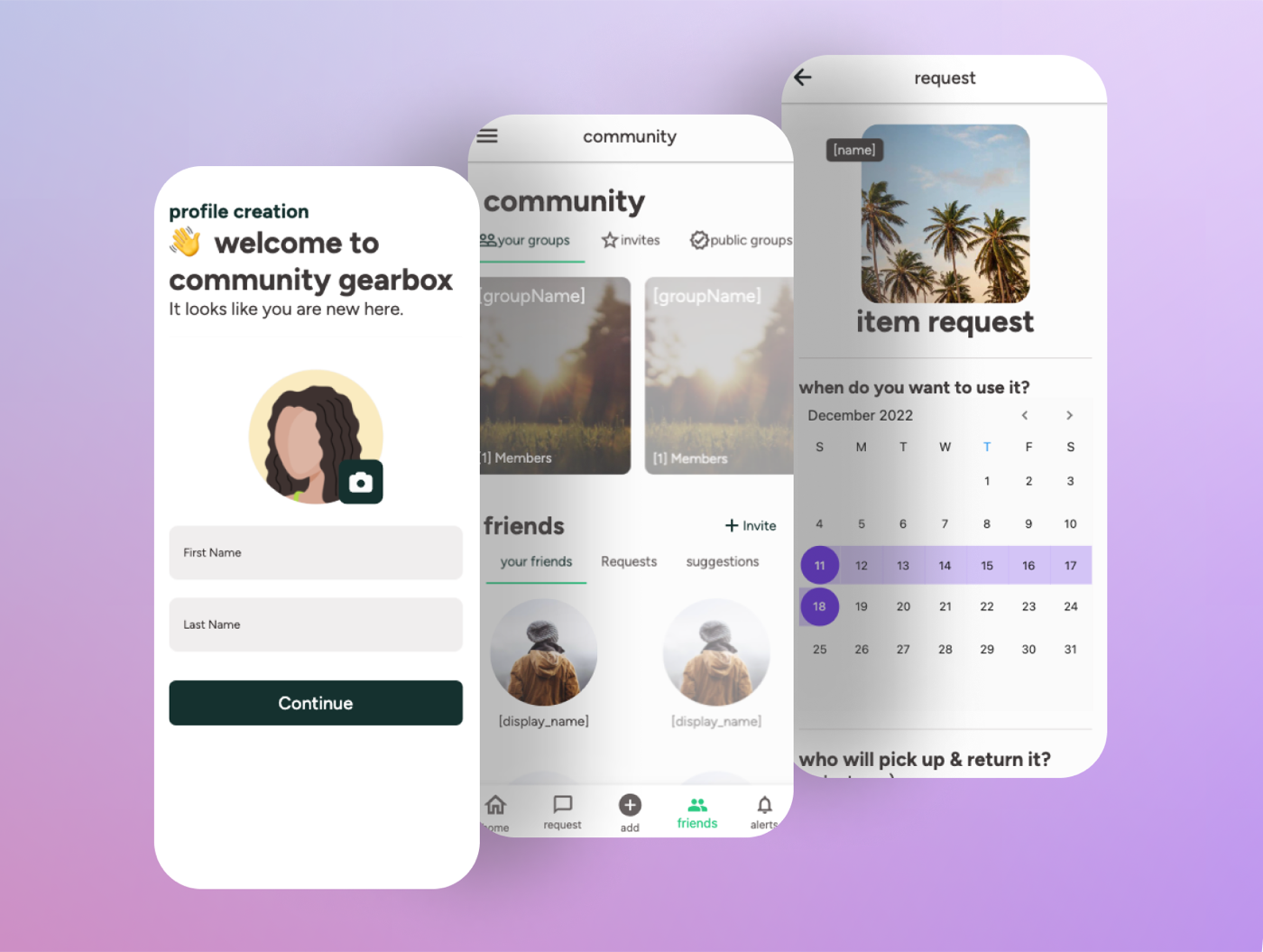
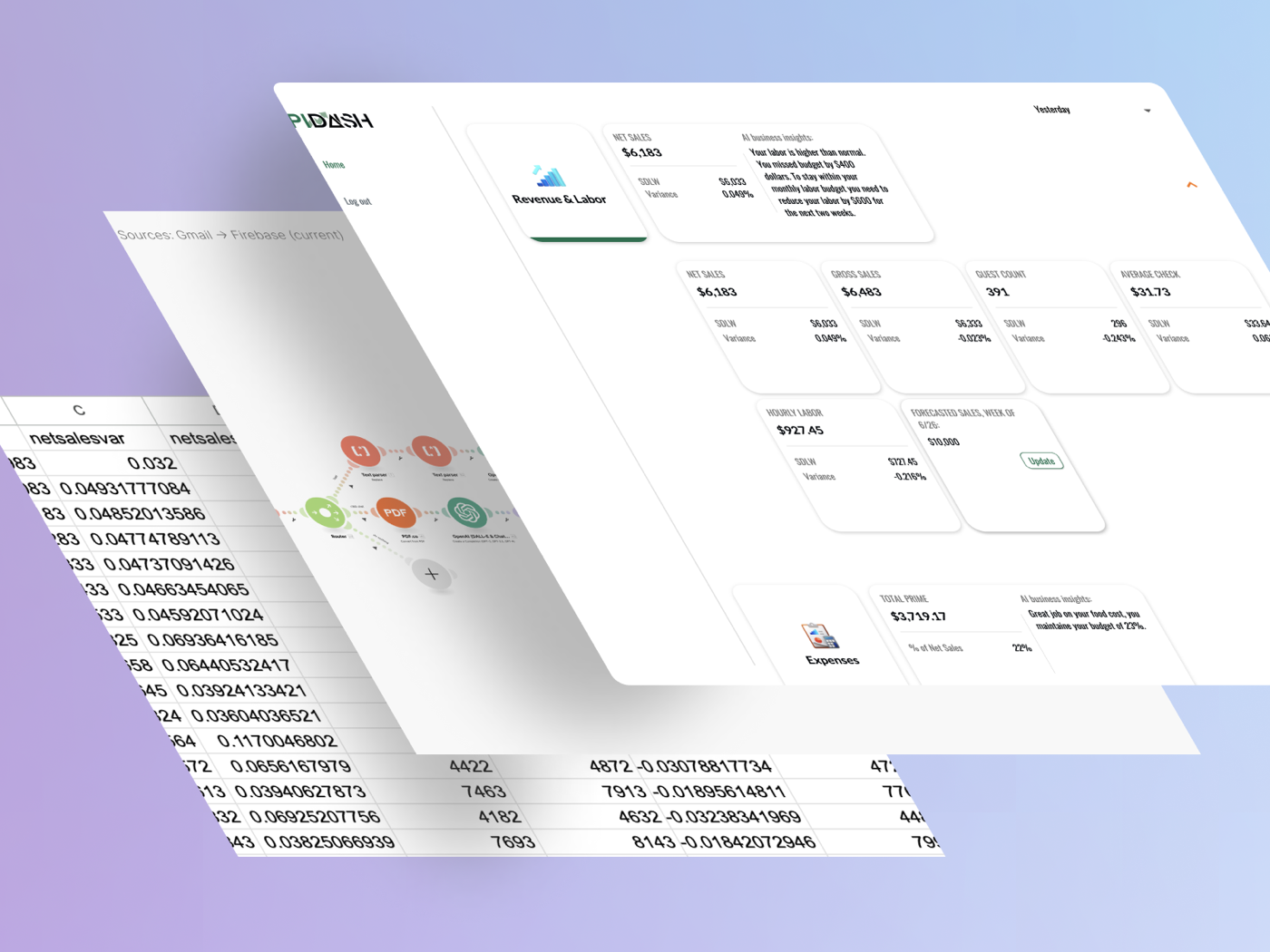
How we ship, from our own case studies: Grove moves real money through Plaid and Stripe and went from idea to both app stores in six weeks. Community Gearbox began as an early prototype its founder asked us to rebuild so more people could use and test it; in six weeks we narrowed it to the hypothesis he was testing and shipped a two-sided app. KPI Dash, an AI-powered web app, shipped 15 features in four weeks of development. None of the three was a migration from these tools; what carries over is how we scope, build and hand over.
What changes is the floor underneath your product. Every rule that protects your data is enforced on a server and covered by a test, every deploy is reversible, and every engineer you hire can read the codebase without a tour. And you keep building with AI, as we do every day, because now a test suite and a review process catch it when it's wrong.
[Platform guides]
[Smaller engagements]
Migrating off FlutterFlow, Bubble, Webflow, or Airtable instead? See no-code migration →
[FAQs]
No, and you shouldn't. The interface, the product decisions and usually the data model are the expensive parts to figure out, and your prototype already contains all three. What gets replaced is the structure underneath: duplicated logic becomes shared modules, client-side checks become server-enforced rules, and the missing engineering practice (tests, environments, monitoring) gets built. Much of your interface can survive nearly intact. Base44 is the exception: its backend lives inside the platform, so the app is rebuilt, but your product decisions, your data and your users come with you.
Run them, because they catch real problems. Lovable runs a quick scan on every publish and offers a deeper code scan, Bolt has a security audit in its Publish menu, and Base44 has its own scanner. They are automated passes over the project as it stands, and Lovable says its scans do not replace a thorough security review. The sprint adds what an automated pass can't: a permission model written for your product and tests that prove each rule holds. Our AI-generated code audit page covers what a full review includes.
Every migration starts with a two-week strategy sprint for a flat $4,000: we map your current app into a features table, wireframe what changes and scope the first release, and we refund the sprint in full if we don't move forward together. We quote the build from that scope. With our AI-accelerated process, most builds cost a fraction of what a traditional agency would charge for the same product. If the sprint finds a sound build with specific security and reliability gaps, the scope is a focused hardening job rather than a full migration.
Two weeks for the strategy sprint, then about 6 weeks for most builds, versus the roughly 6 months a traditional agency rebuild typically takes. Prototype migrations move faster than new builds for one specific reason: your app already answers the product questions, so engineers spend their time building instead of deciding. Critical security fixes come first rather than waiting for the full timeline.
It may be, and the failures to look for are a small, predictable set: database tables readable or writable by anyone, permission rules that check nothing, privileged keys in the browser bundle, serverless functions with no authentication, and authorization that only exists in the interface. These are not exotic vulnerabilities or a sign you did something wrong; they are what happens when a code generator optimizes for a working demo. Each is straightforward to fix once someone looks. Our free Supabase RLS checklist and Firestore Security Rules checklist give you a test for every item, so you can look today.
Yes, and that's the point. The problem was never AI writing code; our own engineers do it all day. The problem is AI writing code with no types, no tests, no review and no architecture to write into. Once those exist, AI-assisted development becomes reliable rather than risky, and we set your team up to work that way, whether that means Claude Code or Cursor in the repository or keeping the original builder for sandboxed experiments.
[Interested?]