DreamLabs
DreamLabs
DreamLabs
[Beyond Lovable]
Vibe coding in Lovable got your app to its first users. DreamLabs, a fractional product team, takes it to production: tested, secured and running on a repository, database and hosting your company owns, with Lovable Cloud data and users carried across. Start with a two-week strategy sprint for a flat $4,000, refunded in full if we don't move forward together; most builds then take about 6 weeks.
Start with a strategy sprint[What comes next]
Lovable gives you a lot to work with. New apps run on TanStack Start with server-side rendering (apps created before May 13, 2026 use React and Vite), backed by Postgres through Lovable Cloud or a Supabase project you connect. Git sync keeps a GitHub, GitLab or Bitbucket repository in step both ways on every plan, and Lovable hosts the app and scans it for security issues every time you publish. Getting real people to use a product you described in a chat is the hard part, and Lovable got you there.
The next stage asks for things a managed workspace isn't built to hand you. Lovable chooses the stack for you: it does not offer a choice of framework or database, and it builds web apps, not React Native. On Lovable Cloud, the default backend, Lovable runs the database, auth, storage and functions for you, your app's AI features and connectors run through Lovable on the same credit balance as building and hosting, and the region is locked once Cloud is on. Lovable is also candid that its security scans do not replace a thorough security review, and suggests a professional one for apps that handle sensitive data.
Lovable's own guide to hosting outside Lovable names its reasons to move: a deployment pipeline of your own, a compliance or data-residency rule, or a company hosting policy. We'd add three more: a customer's security questionnaire, engineers who need to branch, test and review on their own terms, and a roadmap that includes a native mobile app.
If none of that applies yet, stay. An internal tool or an early product with low-risk data is well served by Lovable's hosting and scans, especially once your database rules pass our free Supabase RLS checklist. If that's the right call, we'll tell you in the sprint rather than sell you a migration you don't need.
Lovable details on this page were checked against Lovable's documentation on October 7, 2026.
[How it works]
[01]
Two weeks, flat $4,000, refunded in full if we don't move forward together. We map your app into a features table, wireframe what should change, and scope the first release. Alongside it we review your repository and database for tables without row-level security, policies that let everyone through, secret keys in the client bundle, edge functions without authentication, and checks that only happen in the browser. We also pair everything Lovable runs for you, from Cloud and AI features to hosting, with its destination. You leave with findings and the scope we quote the build from.
[02]
First we close what the sprint found. Every table gets a policy written from an explicit permission model rather than from whatever made the feature work, privileged keys are rotated out of the client, edge functions get authentication and input validation, and the rules that decide who can see what move to the server where users can't reach around them. Each rule ships with a test that tries to break it.
[03]
Senior engineers restructure the generated code into an architecture that holds: shared components instead of duplicates, TypeScript types shared between the client and the database, one data-fetching pattern and clear module boundaries. AI speeds up the mechanical refactors and test coverage while the structural decisions stay with the engineers. CI/CD and separate environments go in alongside, so a regression is caught by the pipeline rather than by a customer.
[04]
We restore your data into your own accounts, run the new build against it, and verify sign-in and every flow with migrated accounts. For the final copy we pause writes briefly, take Lovable's last export (it allows one every 24 hours), restore it, and point your domain at the new hosting. Then you get the repository, the infrastructure accounts and documentation a new engineer can onboard from, and the Lovable subscription becomes optional rather than load-bearing.
[Where you land]
You stay in the ecosystem you're already in: React with TypeScript, on TanStack Start or Vite as your app already is, or Next.js when it earns its place, talking to Supabase in your own organization, the open-source foundation Lovable Cloud uses, now with a reviewed schema, tested policies, versioned migrations and backups you have restored. Hosting runs on Vercel, Cloudflare or your own cloud, with CI/CD, staging and monitoring around it. If the roadmap needs the App Store, the same product extends to React Native, which Lovable doesn't generate.
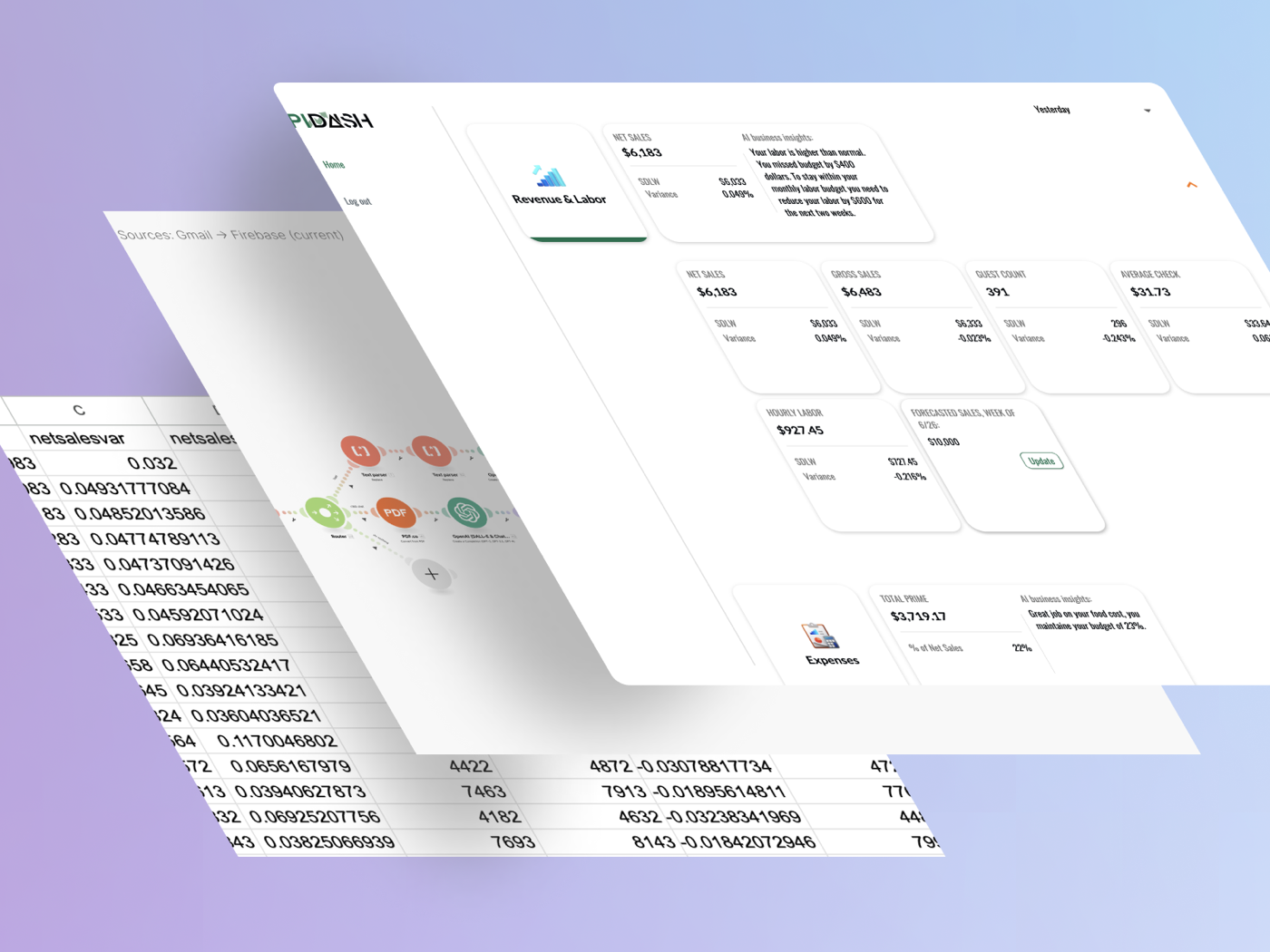
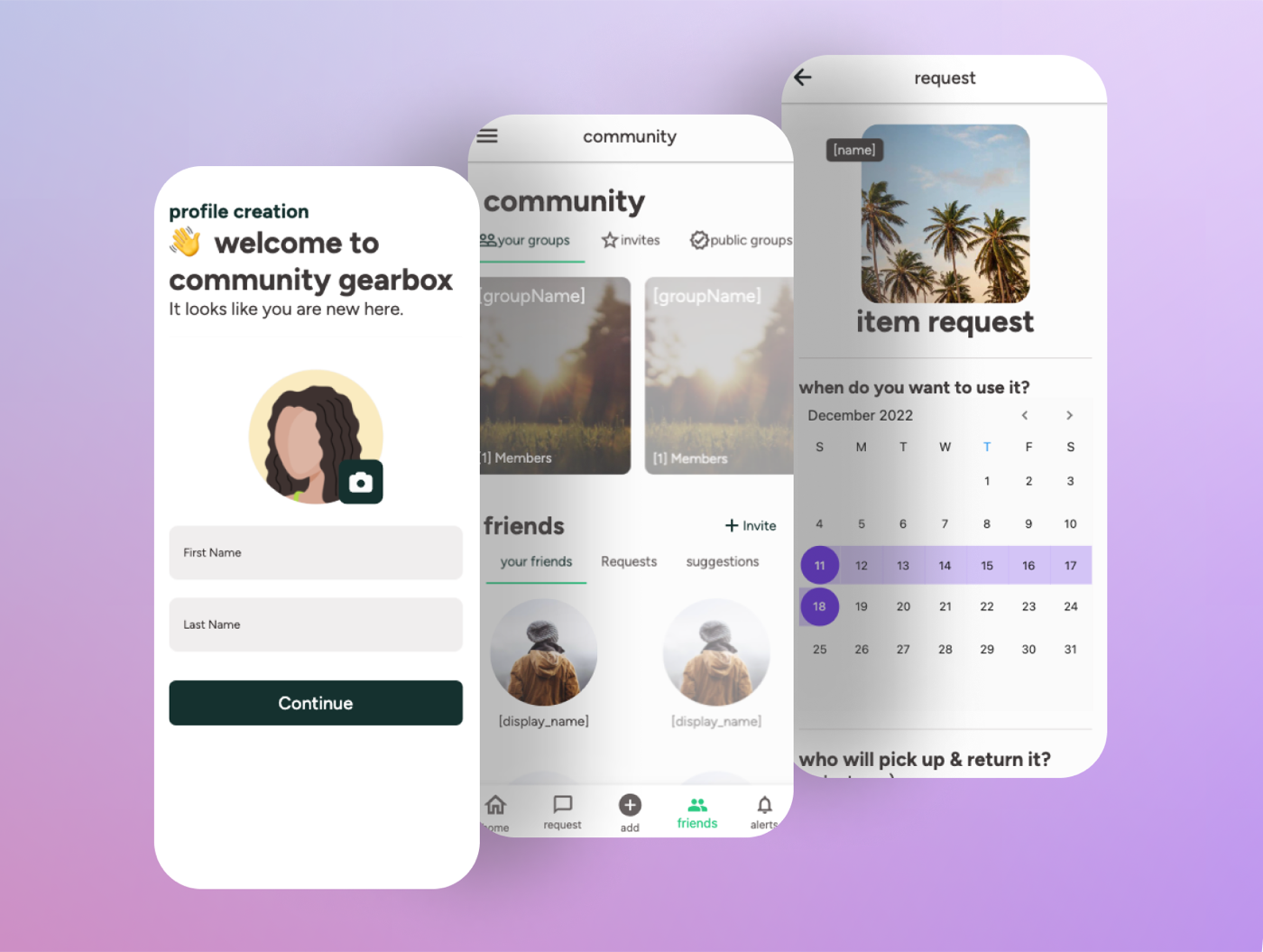
How we ship: KPI Dash, an AI-powered web app that pulls a hospitality manager's numbers into one dashboard, shipped 15 features in four weeks of development. Community Gearbox began as an early prototype its founder asked us to rebuild so more people could use it, and its core is a permission model: what you can see and borrow depends on which groups you belong to. Neither started in Lovable; both show how we scope, build and hand over.
For users, the only change is at most one fresh sign-in at the switch. For you, the rules protecting your data are enforced where users can't reach them, and any React engineer you hire can read the codebase without a tour.
[Other platforms]
[Smaller engagements]
Migrating off FlutterFlow, Bubble, Webflow, or Airtable instead? See no-code migration →
[FAQs]
It is, and that is a real head start: Lovable's Git sync keeps the repository in step both ways on every plan, and paid plans can download the whole codebase. But owning code and running production code are different things. On Lovable Cloud the database, auth, storage and functions run on infrastructure Lovable manages, and AI features and connectors run through Lovable. The migration makes the code something a security review, a new engineer and many more users can all survive, on accounts you control.
They come with you. Lovable's database export contains your full schema and data, including users' accounts and password hashes, so when we restore it into a Supabase project in your account, people keep their passwords. Storage files, edge function code, secrets and sign-in provider settings move separately, and Lovable's AI and connector calls are replaced with your own accounts. Lovable allows one export every 24 hours, so we rehearse with a test export first, then pause writes briefly for the final copy. Anyone signed in at the switch signs in once more.
Start with what Lovable already gives you. A quick scan runs on every publish and flags tables without row-level security, rules that let everyone through and leaked-password protection turned off, and a deep scan reviews your code for access-control, payment and authentication issues. Lovable says these scans do not replace a thorough security review. To go further yourself, our free Supabase RLS checklist has 23 checks, each with a test you can run against your own project.
No, and usually you shouldn't. Supabase is Postgres with a good platform around it. If you connected your own Supabase project, it stays; if you're on Lovable Cloud, which is built on Supabase's open-source foundation, we move you into a Supabase project you own. Either way the schema and policies get redesigned against a real permission model, with versioned migrations and backups.
For experiments, yes. Lovable's sync edits one branch at a time and Lovable creates its own repository for each project rather than connecting an existing one, so the production codebase is best kept outside it. Our own team uses AI inside the repository, with tools like Claude Code or Cursor, where types, tests and review catch what the AI gets wrong.
Every migration starts with a two-week strategy sprint for a flat $4,000: we map your current app into a features table, wireframe what changes and scope the first release, and we refund the sprint in full if we don't move forward together. We quote the build from that scope. Most builds then take about 6 weeks, at a fraction of the cost of a traditional agency rebuild, which typically takes 6 months. Small apps, or apps whose Supabase backend is already in good shape, take less, because the product decisions, design and data already exist.
[Interested?]