DreamLabs
DreamLabs
DreamLabs
[Cost guide]
For founders building an app where creators share, recommend and earn, or where every user brings in the next. You'll see what referral tracking, payouts, content and moderation cost, from the providers' own price lists, and what we learned launching GlowCode in eight weeks. DreamLabs builds these apps starting with a $4,000 two-week strategy sprint; most builds take about 6 weeks after it.
Start with a strategy sprint[At a glance]
| Cost line | Published price | When you pay it | How to keep it down |
|---|---|---|---|
| Referral links | Universal Links and App Links: built into iOS and Android. Firebase Dynamic Links: shut down August 25, 2025. Third-party deep linking: Branch publishes tiers, not prices | Build time, then any vendor plan | Back every link with a code people can enter at signup |
| Paying creators: Stripe Connect | Stripe-set pricing: no platform fees. Your own pricing: $2 per monthly active account + 0.25% + 25¢ per payout. Instant Payouts: 1% | Every month you pay out | Start with creators' own affiliate programs; add payouts when volume justifies them |
| Tax forms | IRS: Form 1099-NEC at $2,000 or more a year. Stripe, on your own pricing: $2.99 per 1099 e-filed with the IRS, $1.49 per state e-filing | Yearly | Let your payout provider generate and file them |
| Photos and video: Firebase Cloud Storage | 5 GB stored and 100 GB downloaded a month free (new US buckets in three regions, Blaze plan), then Cloud Storage rates | Monthly, by usage | Resize on upload and serve thumbnails |
| Moderation | OpenAI moderation endpoint: free, text and images. Google Cloud Vision SafeSearch: 1,000 images a month free, then $1.50 per 1,000. Human review: your team's time | Every post | Automate the first pass; review only what is flagged |
| Backend: Firebase | Firestore: 50,000 reads a day free, then $0.03 per 100,000 (us-central1) | Monthly, by usage | Count views and clicks in aggregate |
| App stores | Apple Developer Program $99 a year; Google Play $25 once | Yearly, and once | Fixed |
| Build team: market rates | Clutch: most app projects $10,000–$49,999, at $25–$49 an hour, social apps included. BLS median developer salary: $135,980 | During the build | Launch with the fewest user types that prove the loop |
| Build team: DreamLabs | $4,000 two-week strategy sprint, refunded in full if we don't move forward together; your build price is set and approved at the end of it | Sprint first, then the build | The sprint cuts what version one doesn't need |
[Cost drivers]
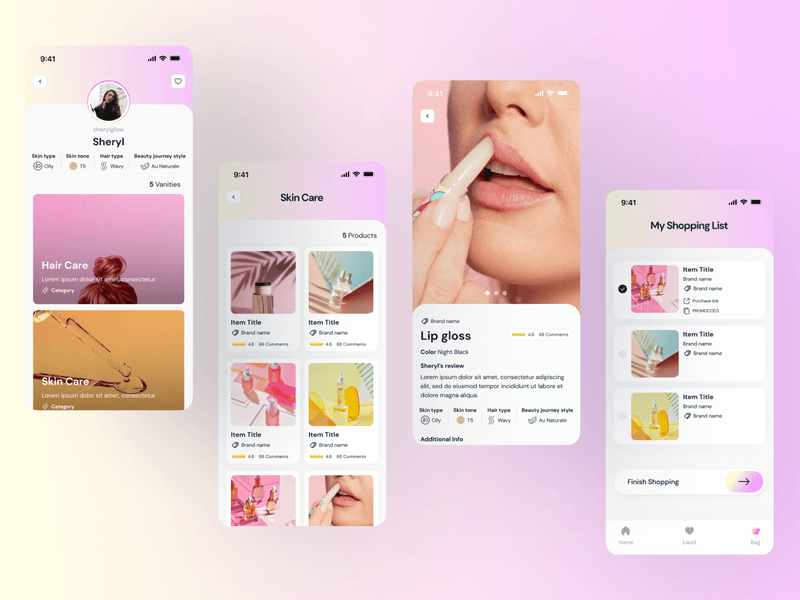
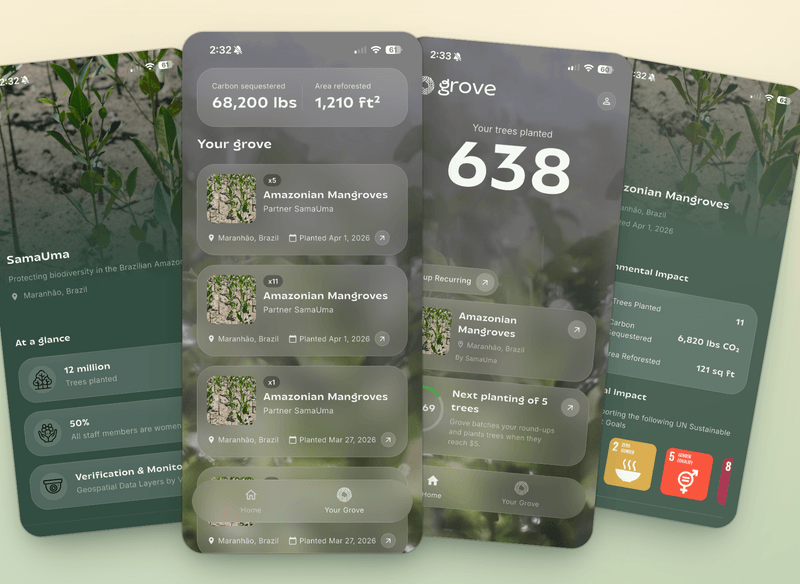
A creator or referral app grows when sharing is effortless, credit lands with the right person and people trust what they see. Each of those has a price: links that survive an install, a way to pay or reward people, content and the storage behind it, and moderation the app stores require before launch. Below is each one from the providers' own pages, checked on October 8, 2026, and what we learned building GlowCode, a social beauty app where influencers earn referral income, and the referral codes in Grove, our own app.
The hard part of a referral is the gap between a tap and a first launch. A link that opens an app someone already has is free: Universal Links on iOS and App Links on Android are, in Firebase's words, "platform-supported ways" to deep-link. Carrying the referral through a fresh install is harder. Firebase Dynamic Links shut down on August 25, 2025, and its links now return a 404; Firebase points teams that need the old features to third-party providers, which it notes it hasn't vetted. Their prices aren't always public: Branch, for one, lists three tiers and a free trial but no dollar figures.
The platforms set the limits. On Android, Google Play's Install Referrer API gives your app the referrer URL of the install and when the referring click happened. On iOS, Apple's privacy rules forbid deriving data from a device to uniquely identify it, and require tracking permission for deferred deep-linking tools that pass identifiers across companies' apps for advertising.
The dependable fallback costs nothing per use: a code. Grove asks for a referral or affiliate code at signup, including codes that join a community grove shared with friends, family or a creator, and when a member shares a personal code, both people earn bonus trees. GlowCode gives every user a personal profile link that displays their profile on the web and prompts visitors to download the app, so the share works before anyone installs anything.
The biggest cost decision in a creator app is whether you move the money yourself. If creators already belong to brands' affiliate programs, your app can carry their links and codes and leave the paying to those programs. That's the shape of GlowCode's first version: influencers earn referral income from the affiliate links and discount codes they add to their product reviews, and the app tracks their profile views and affiliate-link clicks.
Running your own payouts adds a ledger, identity checks, tax forms and support. Stripe Connect has two pricing models. If Stripe sets and collects processing fees from your creators, your platform pays no account, payout or tax-reporting fees. If you set your own pricing, it's $2 per monthly active account plus 0.25% + 25¢ per payout, and $2.99 per 1099 e-filed with the IRS ($1.49 per state e-filing). Instant Payouts cost 1% of volume either way. On that second model, paying a creator $50 in a month costs about $2.38 at the headline rates, close to 5% (our arithmetic); Stripe's comparison table also lists a 0.25% funds-routing fee on payout volume, so confirm the total with Stripe. In the US, the IRS instructions now set the Form 1099-NEC threshold at $2,000 in a year, for tax years beginning after 2025. This is general information, not tax advice.
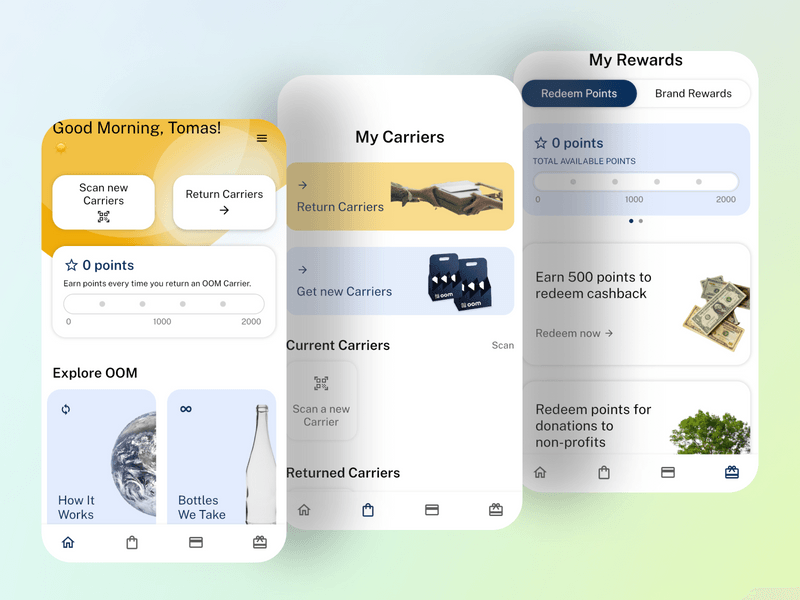
Small rewards can skip cash entirely. Grove rewards referrals in bonus trees, and OOM's app turns each returned container into points that users redeem for cash sent to their Venmo account or for donations to community organizations.
Creator apps run on content: products, reviews, photos and short videos. The catalog can grow as users add items, or you can seed it, and seeding comes with terms. Open Beauty Facts, for example, lists more than 13,000 cosmetic products as open data under the Open Database License, which asks you to credit the source and share improvements under the same license. Media is the other half. On Firebase, Cloud Storage needs the pay-as-you-go Blaze plan; new buckets in us-central1, us-west1 or us-east1 include 5 GB stored and 100 GB downloaded a month at no cost, then bill at Cloud Storage rates. Resizing images on upload keeps that bill tied to thumbnails rather than originals.
Both app stores make moderation a launch requirement, not a later feature. Apple's Guideline 1.2 requires apps with user-generated content to filter objectionable material, let people report offensive content with timely responses, block abusive users and publish contact information. Google Play's user-generated content policy adds terms users accept before they post and moderation that's reasonable for the content you host. The automated first pass is cheap: OpenAI's moderation endpoint is free for text and images, and Google Cloud Vision's SafeSearch detection is free for the first 1,000 images a month, then $1.50 per 1,000. Budget your team's time to review what gets flagged.
Trust has rules of its own. The FTC says "affiliate link" on its own may not tell people the creator gets paid, while "paid link" right next to the link should be adequate, so build a clear disclosure into the review screen rather than leaving it to captions. Its Consumer Reviews and Testimonials Rule, in effect since October 21, 2024, allows incentives for reviews but bans tying them to a positive or negative sentiment. For a review app like GlowCode, which promises honest reviews, those rules are part of the product.
Market data for the build is broad. Clutch's pricing guide, drawn from verified client reviews and updated September 21, 2026, lists app development companies at $25 to $49 an hour, social apps included, puts most app projects at $10,000 to $49,999 and a typical mobile project at about 11 months, and says features, not industry, drive the price. If you hire instead, the BLS median salary for software developers was $135,980 in May 2025, before benefits.
In a creator app, the estimate moves with the number of user types and with payouts. GlowCode's first version served two user types, personal users and influencers, with onboarding, collections of product reviews, shareable web profiles, saved profiles, a shopping list and creator analytics, and went from idea to launch in eight weeks.
Fixed costs are small: the Apple Developer Program at $99 a year and Google Play's $25 one-time registration. Usage costs grow with your community: database reads and writes (on Firestore, 50,000 reads a day are free, then $0.03 per 100,000 in us-central1), media storage and downloads, moderation calls past the free tiers, payout fees if you run payouts, and any deep-linking plan. Count views and clicks in aggregate rather than writing every tap to the database. Then budget for learning: after launch, we ran four user testing sessions with GlowCode's users that produced 24 points of feedback for product improvement.
[How we'd build it]
[01]
Two weeks, $4,000 flat, refunded in full if we don't move forward together. We map who shares, what a new person sees, what earns credit and how rewards are paid, and leave you with a features table, wireframes for your core flows and the scope of your first release. Your build price is set and approved at the end.
[02]
AI-accelerated development in Flutter on Firebase, so one codebase ships to the App Store and Google Play, or React where the web leads. Sharing, codes, web profiles and moderation tools come first; we test on real devices throughout.
[03]
Store launch, then user testing included as a free bonus. For GlowCode we designed and led four sessions that produced 24 points of feedback for product improvement.
[04]
Stay on monthly, priced from your roadmap, to add payouts, rewards or new user types as the loop proves itself, or hand the product to your own team. Either way you own the code and the accounts.
[Where we fit]
DreamLabs is an AI-powered app development agency in California that works as a fractional product team, from strategy to launch. Tomás Quiñonez-Riegos leads product and John Krueger leads development (meet the founders). We don't just say yes, we ask why, and in a creator app, that's how the first release stays small enough to launch.
Sheryl Patel, founder of GlowCode: “As an entrepreneur, I got excited about adding more features, but they did an outstanding job of keeping me and the project focused on sticking to features that count.”
Every project starts with the two-week, $4,000 strategy sprint, and you own every line of code, every signing credential and every store account.
[Cost and timeline guides]
Still deciding who should build it? Compare agency, freelancer, in-house and fractional paths →
[FAQs]
It depends on how many user types the first version serves and whether it pays creators itself. Clutch's pricing data, from verified client reviews, puts most app projects at $10,000 to $49,999, at $25 to $49 an hour, social apps included. Running costs sit on top: storage and database usage, moderation past the free tiers, and payout fees if you pay creators directly. At DreamLabs, every project starts with a two-week strategy sprint for a flat $4,000, refunded in full if we don't move forward together, and your build price is set and approved at the end of the sprint.
Firebase Dynamic Links shut down on August 25, 2025, and its links now return a 404. For people who already have the app, Universal Links on iOS and App Links on Android open it directly. For new installs, Android apps can read the referrer through Google Play's Install Referrer API, third-party deep-linking providers sell the rest, and a referral code entered at signup works on every platform. Grove uses signup codes for referrals and community groves.
Either leave payment to the affiliate programs creators already use, or pay them yourself through a payout provider. With Stripe Connect, if Stripe sets and collects processing fees from your creators, your platform pays no account, payout or tax-reporting fees; if you set your own pricing, it's $2 per monthly active account plus 0.25% + 25¢ per payout, and $2.99 per 1099 e-filed with the IRS. The IRS now requires Form 1099-NEC for nonemployee compensation of $2,000 or more a year, for tax years beginning after 2025. This is general information, not tax advice.
Under FTC guidance, people should be able to tell when a creator gets paid for a recommendation, and the disclosure belongs next to the endorsement. The FTC says the label 'affiliate link' alone may not be clear, while 'paid link' right next to the link should be adequate. Build the disclosure into the screen where links appear. Separately, the FTC's Consumer Reviews and Testimonials Rule, in effect since October 21, 2024, bans incentives tied to a review's sentiment.
The automated first pass can cost little or nothing: OpenAI's moderation endpoint is free for text and images, and Google Cloud Vision's SafeSearch detection is free for the first 1,000 images a month, then $1.50 per 1,000. The larger cost is people: someone has to review flagged posts and answer reports in good time, which Apple's Guideline 1.2 requires along with user blocking and published contact information.
GlowCode went from idea to a launched app in eight weeks, and it's on both app stores. With DreamLabs, the strategy sprint takes two weeks and most builds take about 6 weeks after it. For comparison, Clutch puts a typical mobile app project at about 11 months end to end.
Every project starts with a two-week strategy sprint for a flat $4,000, refunded in full if we don't move forward together. The sprint delivers a features table, UX wireframes for your core flows and the scope of your first release. Your build price is set and approved at the end of the sprint, and that's what you pay.
[Interested?]